Africa


Related GlobalGayz Articles & Photos:

Zimbabwe – Harare City Views and Gay GALZ (photos)

| December 19th, 2009 | Comments Off

Zimbabwe is the former Rhodesia, a colony of Britain for a hundred years.  After a civil war, 1965-1979, the country became independent in 1980 under the leadership of Robert Mugabe. He has been president ever since and has ruled with a corrupt and violent hand. Superficially Harare appears to have a veneer of prosperity as reflected in various modern buildings and a reasonable array of new-ish cars in the streets, But beyond the business center and a few middle-class residential areas the domestic scene is grim with high unemployment and substandard housing. GALZ (Gays and Lesbians of Zimbabwe) is the major gay organization in the country. It has been around for nearly 20 years, avoiding political and police intrusions mostly because of the effective AIDS education and health that they offer. Unfortunately, GALZ leader Keith Goddard died in Ocober 2009 leaving behind a grieving community.

See the Full Version Here

Zimbabwe – Harare City Views (photos)

| December 18th, 2009 | Comments Off

Zimbabwe is the former Rhodesia, a colony of Britain for a hundred years.  After a civil war, 1965-1979, the country became independent in 1980 under the leadership of Robert Mugabe. He has been president ever since and has ruled with a corrupt and violent hand. Superficially Harare appears to have a veneer of prosperity as reflected in various modern buildings and a reasonable array of new-ish cars in the streets, But beyond the business center and a few middle-class residential areas the domestic scene is grim with high unemployment and substandard housing.

See the Full Version Here

How Did These Homophobes Lose Their Humaneness?

| October 30th, 2009 | Comments Off

(Humaneness: marked by compassion, sympathy, or consideration for humans or animals) Well, isn’t this a sweet headline from a government official: Ugandan Ethics Minister James Nsaba Buturo spoke with journalists today. While acknowledging the great numbers of “foreigners” who express grave concern over the possibility of such a [proposed anti-gay] bill becoming law, he made it clear that he is not paying attention to them. Buturo balked at the notion that the proposed bill — which, among other things, would criminalise any public discussion of homosexuality and could penalise an individual who knowingly rented property to a homosexual — constituted a human rights violation. “We are really getting tired of this phrase human rights. It is being abused. Anything goes, and if you are challenged? ‘Oh, it’s my right’,” the minister snapped. Read more: African Veil, Asylum Law, Behind the Mask And then there’s Dr. Rick Scarborough of Vision America

See the Full Version Here

For Gays and Lesbians Apartheid is Alive and Well

| October 28th, 2009 | Comments Off

  Laguna Beach, CA – October 28, 2009 Richard Ammon – GlobalGayz.com   Last night on PBS a drama titled ‘Endgame’ was broadcast nationwide that focused on the intense and delicate negotiations in South Africa in the late 1980’s that brought down apartheid and brought a new dawn of democracy in that tormented country.   It was a gripping drama of real life brought close up with cameras, script and fine acting by players who had not previously been privy to the dangers and risks of the political and murderous chess match. At any one time, any one of the historical figures could have been assassinated, including Nelson Mandela whose release from 27 years in prison was the keystone to the new order of life in South Africa.   I couldn’t help thinking of the poignant parallel between the South African apartheid mentality that justified so much killing and violence,

See the Full Version Here

Proposed Anti Homosexuality Bill in Uganda

| October 15th, 2009 | Comments Off

  Westhampton, MA – October 15, 2009 Richard Ammon -GlobalGayz.com   Sexual Minorities of Uganda (SMUG) Condemn the Proposed Anti-homosexuality Bill Last year GlobalGayz visited Uganda and met several of the LGBT activists involved in SMUG and other rights organizations. Their story is one of persecution, clandestine living, arrests and police abuse. Just before and after my visit members were harassed by authorities and roughed up for their non-violent activity–including unfurling a banner at an HIV conference where there was no mention of MSM as a high-risk group. (Read the story here.) This highly discriminatory bill, described here, was at that time being rumored about but had not yet been fully composed. Now it is here in its pernicious violating form and is being urged upon Parliament by right-wing religiously-fed legislators who simply hate any idea about about homosexuality–never mind how much it violates the country’s constitutional guarantees of expression,

See the Full Version Here

Death of Important Gay ‘Hero’ Keith Goddard of Zimbawe

| October 13th, 2009 | Comments Off

Westhampton, MA – October 13, 2009 Richard Ammon – GlobalGayz.com Yesterday I received the very sad news about the death of LGBT leader Keith Goddard, director of GALZ (Gays and Lesbians of Zimbabwe). GlobalGayz was privileged to meet and interview with Keith in the spring of 2009. He was comfortable to be with, witty and thoughtful–and he was a force for change and human rights. We spent much of the day together including a ‘deluxe’ lunch at the nearby 40 Cork Road Cafe where we reminisced about our youthful coming out days (before Mugabe) and compared them to today’s society. Keith was given a frail body but a strong mind and was unruffled about the oppression from the corrupt Zimbabwe government, having eluded serious persecution for nearly 20 years. He knew well how to steer GALZ out of harm’s way and still get the job done of health education all
See the Full Version Here

Algerians Modernize Tradition of Circumcision

| September 25th, 2009 | 3 Comments »

Westhampton, MA – September 24, 2009 Richard Ammon – GlobalGayz.com This is a story from Magharebia News by Hayam El Hadi published yesterday about the ritual of male circumcision in Algeria. The action taken is a surgical removal of the penis foreskin, essentially a mutilation of the body. And for this pain and humiliation the boy is surrounded by dancing and singing and partying adults who are so tightly indoctrinated with ‘tradition’ that they have forgotten the original meaning of the act (as if there was a valid one) and are blind to the modern barbarity of the procedure. What is it the about the male genitalia that it cannot be left alone? Why this obsession with cutting off the ‘sleeve’ of pre-pubescent boys that produces blood and pain and serves no physical advantage or increased value? (Some modernists arguably think it lowers HIV infection possibility.) In a culture where

See the Full Version Here

In loving memory of Zambian lesbian activist Buumba Sikumba

| September 3rd, 2009 | Comments Off

Westhampton, MA – September 2, 2009 Richard Ammon – GlobalGayz.com In loving memory of Zambian lesbian activist Buumba Sikumba (BMJ) who was interviewed by me for the GlobalGayz story on gay life in Zambia in 2008. She passed away in September 2009 after an illness. She was a full spirit with a passion for life and for human rights. A bigger-than-life figure she was also a freelance journalist, radio producer and “one of the best DJs in Lusaka” said one admirer. Her energy and intelligence helped start the current LGBT organization Rainka. Her absence will be felt for a long time.Posted Copperbelt, Zambia.
See the Full Version Here

Malawi – Lilongwe (photos)

| July 17th, 2009 | Comments Off

The Republic of Malawi is a landlocked country in southeast Africa that was formerly known as Nyasaland. The enormous Lake Malawi is almost the same size as the land area. Malawi is over 118,000 km2 with an estimated population of more than 13,900,000. Its capital is Lilongwe, the biggest city is Blantyre. The name Malawi comes from the Maravi, one of the original Bantu tribes to inhabit the area. Malawi has a low life expectancy and high infant mortality. There is a high prevalence of HIV/AIDS, which is a drain on the labor force and government expenditures. There is a diverse population of native peoples, Asians and Europeans, with several languages spoken and an array of religious beliefs—including many Christian denominations that perform a great amount of charity work. Although there was tribal conflict in the past, by 2008 it had diminished considerably and the concept of a Malawian nationality
See the Full Version Here

Mozambique: the Capital City of Maputo (photos)

| July 1st, 2009 | Comments Off

Maputo is the capital and largest city of Mozambique. A port on the Indian Ocean with its economy centered around the harbor. It has a population of about 1,300,000, but the actual population is higher because of slums and other unofficial settlements. Coal, cotton, sugar, chromite, sisal, copra, and hardwood are the chief exports. The city manufactures cement, pottery, furniture, shoes, and rubber. The Mozambique Liberation Front, or FRELIMO, was formed in Tanzania in 1962 and fought for independence from Portuguese rule. The Mozambican War of Independence lasted over 10 years, ending only in 1974 when the Portuguese government regime was overthrown in Lisbon. The new government granted independence to all Portuguese overseas territories. Skilled Portuguese workers fled the country as the new government tried socialism but by the early 1980s the country was bankrupt. Money was worthless and shops were empty as the country was plagued from 1977 to

See the Full Version Here

Mozambique: Pemba Area (photos)

| June 30th, 2009 | Comments Off

Pemba is a port city in northeast Mozambique. It was founded by the Niassa Company in 1904 as Porto Amélia, after a queen of Portugal. The city is renowned for its Portuguese colonial architecture. It was renamed Pemba at the end of Portuguese rule, in 1975. The city’s inhabitants are primarily Makondes, Macuas and Mwanis. The local language predominantly spoken is known as Macua, although Portuguese is widespread. In the centre of Pemba, there is an authentic local market or Souk, where arts and crafts, as well as traditional silverware can be bought. Pemba is also renowned as being a prime destination for water sport and diving enthusiasts as a coral reef lies close to the shore. Pemba has increasingly become a tourist destination, particularly for upper-middle class Mozambicans and South Africans. Read the Gay Mozambique story   Posted Laguna Niguel, California, United States.

See the Full Version Here

Mozambique: Ilha Mozambique, the Forgotten Former Capital (photos)

| June 29th, 2009 | Comments Off

Ilha de Mocambique is the forgotten former capitol town Mozambique with its mixture of African, Arab and colonial influences and historical dependence on trade. It was an important trading post as early as the 10th century, when merchant ships from as far afield as India and Arabia traded slaves, ivory, gold and spices along the Mozambican coast, the Muslim merchants intermarrying with African families and shaping the region’s culture. Portuguese explorer Vasco da Gama sailed onto the scene in 1498, opening the trade route from Europe to the East Indies and establishing Ilha’s importance. The three-kilometre-long island was the capital of Portuguese East Africa for more than 300 years, its colonial history obvious in everything from the layout of the streets and buildings to the massive fort, church and palace. After 1869 the trade that sustained Ilha went through the Suez Canal and the island’s future faded; later the southern

See the Full Version Here

Mozambique: Traveling Across to Malawi (photos)

| June 27th, 2009 | Comments Off

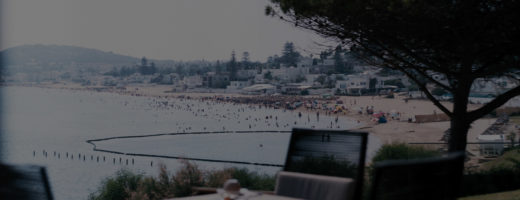
Crossing east to west in northern Mozambique brings the intrepid traveler to the border with Malawi. Within Mozambique there are few main east-west highways and only a limited railway. Part of the reason for inadequate international roads in southern Africa is that most of these countries were occupied by European powers that wanted to keep their colonies separate from rivals’ territories. So virtually all main roads led to the capital city of a colony and not to other countries. After independence most of the warfare that happened (and is still happening) was between intra-territorial tribes fighting for political control (and hence the money in the treasury). Little fighting was carried on between countries—the opposite of Europe. Getting from northern Mozambique west to Malawi is not an easy ride. Partly by train, partly by crammed minibus, partly on bicycle and some on foot, the journey is only for the fearless, the
See the Full Version Here

Homosexuality, Tunisian Style

| June 22nd, 2009 | Comments Off

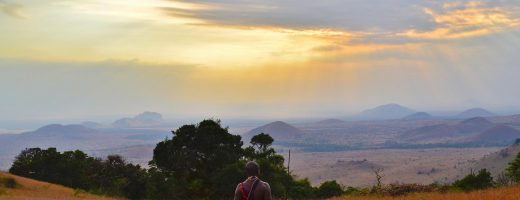
By John Champagne Gay and Lesbian Review May-June 2009 The Avenue Habib Bourgiba is downtown Tunis’s main thoroughfare. Built by the French colonizers as a version of the Champs Élysées and named after Tunisia’s first president, it stretches virtually from the bay of Tunis to the entrance to the medina, the ancient city. While the avenue is divided by a wide promenade full of trees that provide welcome shade in the hot summer months, most pedestrians prefer to stroll along the sidewalks on either side of the street. Lined with restaurants, banks, movie theaters, high-rise hotels, and shops, these sidewalks offer a perfect vista for people-watching.  Day-tripping European tourists from cruise ships, dressed scandalously by Tunisian standards in shorts, tank tops, and flip-flops; slender and handsome Tunisian teenage boys, their arms draped around one another’s shoulders or waists; middle-aged women in colorful headscarves holding hands with their jean-clad daughters; members
See the Full Version Here

Out in Kenya 2009

| June 22nd, 2009 | Comments Off

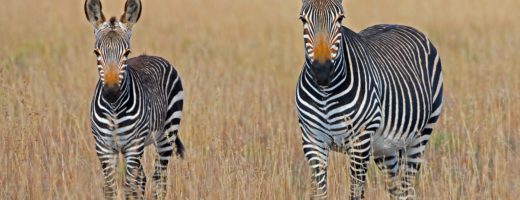
Out in Kenya: Encountering Friends Like Us By Jesus Ramirez-Valles From Gay and Lesbian Review http://www.glreview.com/ May-June 2009 “Are you married?”î That was the first question coming from one of the men seated next to me. I immediately assumed he was curious about same-sex marriage in the United States. I replied that I was not, but had a male partner and a son adopted by him. People in this part of Sub-Saharan Africa have some access to the Internet and young ìgayî men visit websites where they are learning what is like to be homosexual in Western societies. Young gay men here are aware of the legalization of homosexual unions, and its related debates, in Europe and the U.S. Another young man in the circle created by about a dozen young gay men asked me what differences I saw between Kenya and the U.S. Affluence, of course, is a pretty
See the Full Version Here

Gay Malawi: Focused and Determined

| June 14th, 2009 | Comments Off

Gay Malawi Introduction: Despite it’s low profile on the world stage, the small southern African territory called Malawi contains a wondrous variety of scenery, tribal traditions, modern innovation and a nascent and determined gay organization focused around health education and human rights. Within this conservative homophobic culture LGB citizens have found effective ways of survival. By Richard Ammon GlobalGayz.com February 2009 Malawi is one of the smallest countries in Africa and is often considered one of the most impoverished countries in the world. But such a label is too simplistic and shallow for this complex culture of ancient tribal traditions, ambitious entrepreneurs and natural beauty, such as the enormous Lake Malawi (photo right). The label does not account for the rugged survival attitude among its citizens, certainly not it gay citizens “We do what we can to build an organization with little resources, and look what we have here. At

See the Full Version Here

South Africa – Johannesburg (1) (photos)

| June 2nd, 2009 | Comments Off

Modern human beings have inhabited South Africa for more than 100,000 years. At the time of European contact, its indigenous peoples reflected migrations from other parts of Africa. Two major groups were Xhosa and Zulu peoples. The discovery of diamonds and later gold in 1886 triggered war, as the Boers and the British fought for the control of the mineral wealth. Apartheid was established by law in 1948 and additional legislation outlawed relations between different racial groups. South Africa achieved its political independence in 1961 when it was declared a republic. In 1990 then-president F.W. de Klerk began to dismantle apartheid. In 1994 South Africa held its first democratic election and Nelson Mandela and his ANC party came to power. South Africa is known for its diversity in cultures, languages, and religious beliefs. It has three capital cities: Cape Town is the legislative capital; Pretoria is the administrative capital; and

See the Full Version Here

South Africa – Johannesburg (2) (photos)

| June 1st, 2009 | Comments Off

South Africa has three capital cities: Cape Town, the largest of the three, is the legislative capital; Pretoria is the administrative capital; and Bloemfontein is the judicial capital. Johannesburg is the unofficial financial capital of the country. The discovery of diamonds and later gold in 1886 near the city turned it into a massive boom town and later triggered the conflict known as the 3-year Anglo-Boer War, as the Boers and the British fought for the control of the South African mineral wealth. Today Joburg is still the powerhouse of RSA—for the middle and upper classes. The majority of black citizens suffer high unemployment, insecurity and still wait for indoor plumbing. Read the story about Gay South Africa

See the Full Version Here

South Africa – Johannesburg (3) (photos)

| June 1st, 2009 | Comments Off

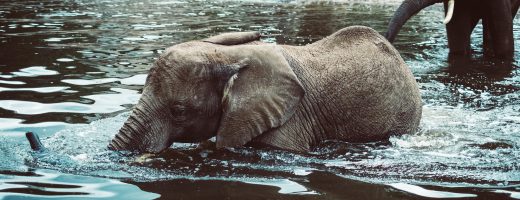
Although Johannesburg is not a capital city it is the powerhouse of South Africa where life is bold, varied and definitely an adventure. South Africa has three capital cities: Cape Town, the largest of the three, is the legislative capital; Pretoria is the administrative capital; and Bloemfontein is the judicial capital. There are numerous comfortable suburbs of quiet living in Joburg, albeit behind gates and electric fences. And this city is home to gay Africa’s finest LGBT site, Behind the Mask. Through journalistic activism, BTM strives to mainstream lesbian, gay, bisexual, transgendered, and intersex interests and to change negative attitudes towards homosexuality and same sex traditions in Africa. Read the story about Gay South Africa
See the Full Version Here

Gay Mozambique

| April 28th, 2009 | Comments Off

Introduction: Mozambique is a large country with a small LGBT representation. Despite the absence of aggressive anti-gay action by authorities, gay citizens keep their secrets and make no showing of Pride in public. A single organization called LAMBDA quietly goes about its business of health, sexual education and human rights; it also presses to become a registered NGO. By Richard Ammon GlobalGayz.com February 2009 It is an odd irony of history that Mozambique was ruled for centuries by harsh and repressive Portuguese regimes during which slavery thrived and brutality was wrought upon the native people—but homosexuality was handled lightly. Unlike many British and French colonies around Africa where the 19th century brought demeaning and deadly criminal laws against same-sex behavior, in Mozambique the ruling class did not act with the same abhorrence. The specific reasons are embedded in complex psycho-religio-political history but the bottom line is that homosexuality was not

See the Full Version Here

Gay Zimbabwe

| April 27th, 2009 | Comments Off

Introduction: Despite the daunting, corrupt and oppressive reputation of Zimbabwe there survives a successful LGBT health and rights organization called Gays and Lesbians of Zimbabwe (GALZ). A visit to the capital city Harare and to GALZ’s home, with its courageous and gentle staff, a visitor catches a glimpse of the real heart of this politically abused country and of the lives of durable LGBT people who dwell here. By Richard Ammon GlobalGayz February 2009 This story features an interview with Keith Goddard, director of GALZ. Keith died prematurely in October 2009 from pneumonia. GlobalGayz was privileged to meet and interview with Keith in the spring of 2009. He was comfortable to be with, witty and thoughtful–and he was a force for change and human rights. We spent much of the day together including a ‘deluxe’ lunch at a nearby cafe where we reminisced about our youthful coming out days (before

See the Full Version Here

Uganda – Lake Bunyonyi (photos)

| January 1st, 2009 | Comments Off

This is Uganda’s most beautiful lake, set among green cultivated hills and home to numerous small villages of farmers, fishermen and pygmies.

See the Full Version Here

Tanzania – Zanzibar (1) (photos)

| January 1st, 2009 | Comments Off

Zanzibar is an island 25–50 km (15–30 mi) off the east coast of Tanzania; it consists of numerous small islands and two large ones: Unguja (the main island known as Zanzibar), and Pemba. Zanzibar was once a separate country with a long trading history within the Arab world; it united (not without bloodshed) with Tanganyika to form Tanzania in 1964, and still enjoys a high degree of autonomy within the union. The capital of Zanzibar is Zanzibar City and its old quarter, known as Stone Town, is a World Heritage Site. Today the islands enjoy a strong tourism industry and the natives–of Arab, Indian and Africa descent–go about their business as usual. This gallery features a spice tour (photos 24 to 42) and a visit to the former slave market in Stone Town (photos 62 to 67) and walks through the markets of Stone Town.

See the Full Version Here

Gay Mauritius

| January 1st, 2009 | Comments Off

“If someone is gay here, he may be regarded as a freak, and made fun of, no matter how straight he may look!” Blending in seems to be the only way to get through the day, “You may not care what others think, but many gay people in Mauritius are afraid someone may recognise them as a gay. The island is too small.” Many gay guys want to leave the island at some point, and many go to South Africa or Europe as soon as they can afford the journey. There’s little appetite for fighting public attitudes. Coming out as gay brings shame on the family as well as personal risk, which most Mauritian gay men aren’t willing to experience.   Also see: Gay Mauritius News & Reports 2006 to present From: Gay Times http://www.gaytimestravel.co.uk/gtt/article.asp?a=136 By Richard Collier Revised by GlobalGayz May 2010 You could do much worse than explore

See the Full Version Here

Faces of Africa (Photo Gallery 1) (photos)

| January 1st, 2009 | Comments Off

Random images from Rwanda, Tanzania, Zanzibar, Zambia, Uganda and Kenya Including International Women’s Day in Livingstone, Zambia, March 8, 2008 (images 51-58) and Victoria Falls in Livingstone (images 61-65)

See the Full Version Here
Page 4 of 7« First...«23456»...Last »