Caribbean


Related GlobalGayz Articles & Photos:

Gays, Ship Cruises and Homophobia in the Caribbean

| October 7th, 2011 | 2 Comments »

Gays, Ship Cruises and Homophobia in the Caribbean Slipping into port and out of mind Four friends of mine, all hard-working professionals, recently completed a cruise on one of the many mega-ships that sail among the hundred islands in the Caribbean Sea, many of which are little countries with their own languages, laws and currency. Others are protectorates or territories of larger European countries and are subject to their laws. Daily, these big ships bring in thousands of customers to small ports of call to visit the beaches, souvenir stalls, restaurants, dive shops, taxi stands and even real estate offices where a certain few fall in love with a place and find their dream home and never leave. Most, of course, ferry back out to their floating hotels after a day’s activities tired and hungry. Needless to say, among the crowds are a portion of gay and lesbian tourists, singles
See the Full Version Here

World’s Largest Gay Party Boat Sails Today Into Caribbean Homophobic Waters–Bahamas

| February 6th, 2011 | 1 Comment »

By Richard Ammon GlobalGayz.com Feb 6, 2011 The world’s largest cruise ship, Allure of the Seas, owned by Royal Caribbean sets sail with 5400 LGBT passengers in February 6-13 for a week of sun, fun, camaraderie and validation. Anyone who is shy about publicly showing their affection to their same-sex partner, friend or a new acquaintance should board this Atlantis Gay Cruises ship to the Caribbean without hesitation. It is truly a gay world during this week. Yet, for all the merriment and celebration on ship, LGBT citizens still live in a larger world of homophobia at virtually every turn. And this great party ship will make a port of call at one such place–Bahamas. Although homosexuality has been legal in the Bahamas since 1991, active homophobia clearly makes its voice (and laws) heard on the islands there. “Two specific aspects of the criminal code still discriminate against gay, lesbian

See the Full Version Here

Anthony’s Story: Gay in Jamaica

| August 27th, 2009 | Comments Off

Summer 2009 By Anthony My name is Anthony, I’m 27 years of age and i live in Jamaica which is in the Caribbean. I just want to share with you what living as a Gay is like in Jamaica. I am gay and my life has been turned up side down all because I’m gay, i found out that i was gay when i was about 14 years old when i was living with my Grand mother in the country. It wasn’t a feeling that i welcome as i have spend years fighting it as I thought that this was just a phase that i was going through and I would get over it. I was in high school at the time and these feelings was growing  stronger each day. I had a cousin that was also having these feelings, so whenever he would come over to the house we

See the Full Version Here

Being Gay in Turks & Caicos Islands

| May 27th, 2009 | Comments Off

(British Caribbean Protectorate) A Conversation with a Resident about Being Gay in the Turks & Caicos Islands (TCI) Also see: Gay Turks & Caicos Stories Gay Turks & Caicos News & Reports Gay Turks & Caicos Photo Galleries January 2007 Introductory comments: Eddi is a resident of Turks & Caicos Islands (TCI) who originally wrote to GlobalGayz inquiring about gay life in Bhutan, In the course of correspondence he revealed he lived in TCI. Since there is virtually nothing on the Internet about gay life in TCI, we asked Eddie to share his insights about this unknown topic. Eddi: I should state that like 2/3 of the population here, I’m not originally from Turks & Caicos Islands. The Belonger population (full citizens) is the political majority and one of the larger groups here but compared to total foreigners Belongers are a demographic minority. (Persons having "belonger" status include those who

See the Full Version Here

Gay Cuba 1997-2002

| January 1st, 2009 | Comments Off

Intro: This story is part one of a pair of stories about gay Cuba on this web site. This first one is a compilation of reports, stories and news that I stitched together from numerous sources before I visited Cuba. I suggest you peruse this before reading part two; it will give you a good idea about how controversial the homosexual issue is in Cuba under socialism. The second story, Gay Cuba 2003, is the result of my visit in February of this year. Getting a ‘take’ on gay Cuba today is like the old adage of four blindfolded observers trying to define an elephant while each is holding a different part of the animal. A unified consensus is very difficult when seen from the separate pieces. While each aspect is valid, any single view is not sufficient to define the beast. Such is gay Cuba today–a fractured, passionate, fearful,

See the Full Version Here

Gay Cuba – Changing

| January 1st, 2009 | Comments Off

Intro: This story is part two of a pair of stories about gay Cuba on this web site. The first, Gay Cuba 1997-02 (on a separate page) is a compilation of reports, stories and news that I stitched together from numerous sources before I visited Cuba. I suggest you peruse that story before reading part two, It will give you a broad idea about how controversial homosexuality is in Cuba under socialism. The second story, on this page, Gay Cuba 2003, is the result of my visit to that once-paradise island where gay life is still alive and humming although repressed. Not surprisingly, lesbigay folks dance a careful line between relative freedom and relative risk. Also see: Gay Cuba Stories Gay Cuba News & Reports 1997 to present Gay Cuba Photo Galleries Richard Ammon Updated July 2008 A brief reading about life in Havana reveals four common themes: (1) watching

See the Full Version Here

Cuba – Havana: City (1) (photos)

| January 1st, 2009 | Comments Off

Cuba was in Spanish possession for almost 400 years (circa 1511-1898). Its economy was based on plantation agriculture, mining and the export of sugar, coffee and tobacco to Europe and later to North America. The political and military history of Cuba in the 19th and 20th centuries has been tumultuous. On December 2, 1956 a party of 82 revolutionaries, led by Fidel Castro, landed in a yacht named Granma with the intention of establishing an armed resistance movement in the Sierra Maestra. The yacht had come from Mexico, where Castro had been exiled and where his army was strengthened with the help of Ernesto Che Guevara, who became one of the most important people in the Cuban revolution and one of Castro’s closest allies. Cuban dictator Fulgencio Batista launched a campaign of repression against the opposition, which only served to increase support for the insurgency and the army lacked the

See the Full Version Here

Cuba – Havana: City (2) (photos)

| January 1st, 2009 | Comments Off

Cuba was in Spanish possession for almost 400 years (circa 1511-1898). Its economy was based on plantation agriculture, mining and the export of sugar, coffee and tobacco to Europe and later to North America. The political and military history of Cuba in the 19th and 20th centuries has been tumultuous. On December 2, 1956 a party of 82 revolutionaries, led by Fidel Castro, landed in a yacht named Granma with the intention of establishing an armed resistance movement in the Sierra Maestra. The yacht had come from Mexico, where Castro had been exiled and where his army was strengthened with the help of Ernesto Che Guevara, who became one of the most important people in the Cuban revolution and one of Castro’s closest allies. Cuban dictator Fulgencio Batista launched a campaign of repression against the opposition, which only served to increase support for the insurgency and the army lacked the

See the Full Version Here

Gay Dominican Republic: New Surprises and Old Fears

| January 1st, 2009 | Comments Off

Introduction Only a couple of days in Santo Domingo, the capital of the Dominican Republic and the oldest city in the Americas, are needed to see the lively gay venues and the lesbigay spirit that is here. The trendy music places that beat late into the night are, however, only the louder tip of a more subdued community of health educators, closeted intellectuals and quiet gay businessmen who all live in a conservative political milieu that inhibits most LGBT people from being more active as advocates. And it doesn’t help that the local Catholic Cardinal has some oppressively medieval ideas about gays. But there is vital gay energy here despite the opposition and LGBT organizations continue to form. An in-depth analysis of the LGBT cultural, social and political scene in Domincan Republic can be read at Dominican Republic Report by Professor/Activist Jacqueline Polanco Also see: Gay Dominican Republic News &
See the Full Version Here

Dominican Republic – Santo Domingo (1) (photos)

| January 1st, 2009 | Comments Off

The Dominican Republic is the site of the first permanent European settlement in the Americas; its capital Santo Domingo was also the first colonial capital in the Americas. It is the site of the first cathedral, university, European-built road, European-built fortress, and more. For most of its independent history, the nation experienced political turmoil and unrest, suffering through many non-representative and tyrannical governments. Since the death of military dictator Rafael Leonidas Trujillo Molina in 1961, the Dominican Republic has moved toward a liberal economic model which has made it the largest economy in the region and a representative democracy. Santo Domingo de Guzmán (known as Santo Domingo) has a population estimated about 2,253,437 (Metro) in 2006, is the largest city in the Dominican Republic, and the seventh largest in North America. Although the country in general is not supportive of the gay community, there is a somewhat attitude of ‘live

See the Full Version Here

Gay Haiti

| January 1st, 2009 | Comments Off

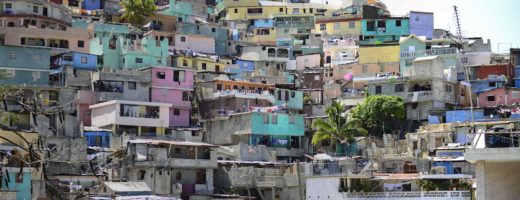
Intro: Probably the most immediate and visual source of knowledge about the LGBT life in Haiti is the 2001 film ‘Of Men and Gods‘ which documents the discreet world of gays and transvestites in this country where homosexuality is legal but not tolerated by the mostly Christian culture. Eighty percent of the country is Catholic and another fifteen percent are Protestant; needless to say, the Biblical curse is heavily upon gays here. Yet more than half the population also indulge in voodoo beliefs and rituals where it’s the spirit that matters, not the gender or orientation. During the reign of the Duvalier dictators (1957-86), as well as today, Haitian gay citizens are forced to walk a shadowy line between revealing themselves to a select few friends and living discreetly in the larger disapproving heterosexual society. Posted here are four stories about life in Haiti from different perspectives: (1) my own

See the Full Version Here

The Taxis in Haiti’s Port au Prince

| January 1st, 2009 | Comments Off

By Richard Ammon March 2003 Updated July 2006 Also see: Gay Haiti Stories Gay Haiti News & Reports 2002 to present  Gay Haiti Photo Galleries A couple of years ago I took several taxi rides in various Japanese cities. The cars were newer models–virtually all white Toyotas–spotless inside and out; the seat backs had doilies and the drivers wore white gloves and neckties. Air conditioning was a standard amenity and the cars were clearly marked with lighted roof signs–yellow for engaged and blue for vacant. When they weren’t driving a customer the owners, in clean white shirts, dusted off their cars with soft feather brushes. Of course all this polish did not come cheaply; even the shortest ride could be seven dollars for a short lift downtown but the comfort and ease was worth it. The antithesis of these Asian comfort cars is to be found in Haiti. Taking a

See the Full Version Here

Haiti – Port au Prince (photos)

| January 1st, 2009 | Comments Off

Haiti occupies the island of Hispaniola, along with the Dominican Republic, in the Caribbean The total area of Haiti is 27,750 square kilometres (10,714 sq mi) and its capital is Port-au-Prince. Haiti’s regional, historical, and ethnolinguistic position is unique for several reasons. It was the first post-colonial independent black-led nation in the world, as well as being the only nation whose independence was gained as part of a successful slave rebellion. Haiti was the first in Latin America to gain its sovereignty (from France) and is also the region’s only independent Francophone nation (the other French-speaking Latin American countries are all overseas departments of France). The United States occupied the island from 1915 to 1934. From 1957 to 1986, the Duvalier family reigned as dictators. They created the private army and terrorist death squads known as Tonton Macoutes. Many Haitians fled to exile in the United States and Canada, especially

See the Full Version Here

Haiti – Jacmel & Port-au-Prince (photos)

| January 1st, 2009 | Comments Off

Haiti occupies the island of Hispaniola, along with the Dominican Republic, in the Caribbean The total area of Haiti is 27,750 square kilometres (10,714 sq mi) and its capital is Port-au-Prince. Jacmel is a serene port town with an estimated population of 40,000 and growing. The city has not changed much since the late 19th century when the town was inhabited by wealthy coffee merchants, who lived in gracious mansions that adorned the town; the architecture of the city boasted cast iron pillars and balconies purchased in France. Today, many of these homes are now artisan shops that sell vibrant handicrafts, papier-mâché masks and carved-wood animal figures. In recent years, efforts have been made to revitalize the once flourishing cigar and coffee industries. The town is a popular tourist destination in Haiti due to its relative tranquility and distance from the political turmoil that plagues much of the country. Haitian

See the Full Version Here

Gay Jamaica: Crime and Punishment

| January 1st, 2009 | Comments Off

Intro: The news from Jamaica for gays is not good; it’s among the least gay-friendly countries in the western hemisphere. The one LGBT organization–JFLAG–posts on its web site this notice: "Due to the potential for violent retribution, we cannot publish the exact location of our office." Laws against homosexuality are actively enforced bringing the wrath of the conservative government on offenders. But worse is the riptide of homophobia that is rampant at the local police and civilian level. Beatings, murders, torture, slashings of gays–or those suspected of being gay–are not uncommon. In the Jamaica News and Reports pages accompanying this story are a dozen grim reports about the conditions for gays in this impoverished and touristy sunshine country that was once a British colony. I have posted here two stories (following the two memorials) the first based on my visit to Jamaica in February 2003. It suggests that the sky

See the Full Version Here

Jamaica – Kingston (photos)

| January 1st, 2009 | Comments Off

Jamaica is formerly a Spanish possession known as Santiago, it later became the British West Indies Crown colony of Jamaica. It is the third most populous English-speaking country in the Americas, after the United States and Canada. Jamaica slowly gained independence from the United Kingdom and in 1958. Jamaica’s prosperity has dimished since the 1980s as major alimina companies have closed or left the country and unemploymnet remins moderately high.The economy is now heavily dependent on services, which now account for more than 60% of GDP. The country continues to derive most of its foreign exchange from tourism, remittances sent home from Jamaicans living abroad, and some bauxite/alumina mining. The economy faces serious long-term problems especiallly as recurrent violence from rival gangs affiliated with the major political parties have evolved into powerful organized crime networks involved in international drug smuggling and money laundering. Violent crime, drug trafficking, and poverty pose

See the Full Version Here

Jamaica – Noel Coward’s House (photos)

| January 1st, 2009 | Comments Off

Noel Coward, the multi-talented British playwright, actor, songwriter raconteur, first visited Jamaica in 1944 on a two week holiday. The and peace of mind he found in Jamaica caused him to refer to it as his "dream island" and he vowed to return one day. Four years later he rented fellow author Ian Fleming’s estate, Goldeneye, located on the north shore of Jamaica. During a six-week stay at Goldeneye Coward purchased eight shoreline acres commanded a fine view of the sea. Inspired by the view of the surrounding Caribbean, Coward named his sanctuary ‘Blue Harbour‘. Due to his popularity he was frequently visited by the gliterati of the age (1950s and 60s), including Winston Churchill and the Queen Mother. For a retreat, he purchased another beautiful tract of land located on a lush hillside one thousand feet above Blue Harbour and named it ‘Firefly‘. He divided his time between the

See the Full Version Here

Jamaica – North Coast (photos)

| January 1st, 2009 | Comments Off

Jamaica is formerly a Spanish possession known as Santiago, it later became the British West Indies Crown colony of Jamaica. It is the third most populous English-speaking country in the Americas, after the United States and Canada. Jamaica slowly gained independence from the United Kingdom and in 1958. Jamaica’s prosperity has dimished since the 1980s as major alimina companies have closed or left the country and unemploymnet remins moderately high.The economy is now heavily dependent on services, which now account for more than 60% of GDP. The country continues to derive most of its foreign exchange from tourism, remittances sent home from Jamaicans living abroad, and some bauxite/alumina mining. The economy faces serious long-term problems especiallly as recurrent violence from rival gangs affiliated with the major political parties have evolved into powerful organized crime networks involved in international drug smuggling and money laundering. Violent crime, drug trafficking, and poverty pose

See the Full Version Here

Jamaica – Montego Bay (photos)

| January 1st, 2009 | Comments Off

Jamaica is formerly a Spanish possession known as Santiago, it later became the British West Indies Crown colony of Jamaica. It is the third most populous English-speaking country in the Americas, after the United States and Canada. Jamaica slowly gained independence from the United Kingdom and in 1958. Jamaica’s prosperity has diminished since the 1980s as major alumina companies have closed or left the country and unemployment remains moderately high.The economy is now heavily dependent on services, which now account for more than 60% of GDP. The country continues to derive most of its foreign exchange from tourism, remittances sent home from Jamaicans living abroad, and some bauxite/alumina mining. The economy faces serious long-term problems especially as recurrent violence from rival gangs affiliated with the major political parties have evolved into powerful organized crime networks involved in international drug smuggling and money laundering. Violent crime, drug trafficking, and poverty pose

See the Full Version Here