Central America


Related GlobalGayz Articles & Photos:

Mexico – Coba Village and Coba Mayan Ruins (photos)

| January 1st, 2009 | Comments Off

Coba is a tiny village adjacent to the vast Coba Mayan Ruins. Life in the village is very quiet and slow. I stayed in the little six-room hotelito ‘Sac-be’ for $16 a night (vs $78 at the near-by Club Med, shown in the final four photos below). My towel was arranged like a flower and the toilet paper was folded like a fan. A young girl, Mariana, about 7 years old checked me in and and showed me to my room, assisted by her 3 year old sister Sena. Then they ran off to play. The ruins here date from about 500-800 AD and are spread across many kilometers. The site contains several large temple pyramids, the tallest, known as Nohoch Mul, being 42 meters in height. The bulk of Coba’s major construction seems to have been made in the middle and late Classic period, about 500 to 900, with

See the Full Version Here

Mexico – Chichen Itza (photos)

| January 1st, 2009 | Comments Off

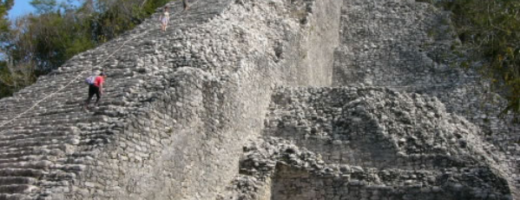
Chichen Itza Ruins The ruins at Chichen Itza date from about 600-900 AD and are a mix of Mayan and Toltec styles. Chichen Itza is a large pre-Columbian archaeological site built by the Maya civilization located in the northern center of the Yucatán Peninsula, in the Yucatán state, present-day Mexico. Archaeological data, such as evidence of burning at a number of important structures and architectural complexes, suggest that Chichen Itza’s collapse was violent. Following the decline of Chichen Itza’s hegemony, regional power in the Yucatán shifted to a new center at Mayapan. Read the story about gay Mexico
See the Full Version Here

Gay Guatemala

| January 1st, 2009 | Comments Off

Two guest writers describe a realistic picture of oppressed life for lesbigays in this small country racked by humiliating poverty and insane revolution over the past generation. Yet small pockets of hope live on in lesbigay hearts and in a few bars in downtown Guatemala City. Also see: Gay Guatemala News & Reports 1996 to present (1) In Guatemala, Bashing Is Just the Beginning By Andrew Reding June 1999 (page updated June 2007) From The Dawn of Gay Rights ( http://www.americas.org/News/Features/199906_Gay_Rights/index.asp) On October 22, 1997, well-known drag queen Geraldo Estupinian (“Stacy”) was found badly beaten and near death in a roadside ditch outside Guatemala City. He died shortly thereafter. Six days later, unidentified assailants shot to death Julio Alfredo (“Freddy”) de la Roca Toledo, a dancer and choreographer, in front of his house. Without corroborating evidence, the National Civilian Police (PNC) attributed the killing to a band of carjackers. On

See the Full Version Here

Mexico – Ek Balam Ruins (photos)

| January 1st, 2009 | Comments Off

Ek’ Balam is a pre-Columbian archaeological site in Yucatán built by the Maya civilization. There are 45 structures, including the Acropolis, the largest structure at Ek’ Balam. It contains the tomb of Ukit Kan Le’k Tok’. It measures 146 meters across, 55 meters wide and 29 meters tall. Read the story about gay Mexico

See the Full Version Here

Mexico – Cancun (photos)

| January 1st, 2009 | Comments Off

Cancun is divided into two distinct areas: the upscale grand hotels along the beach for foreign tourists, and the working class downtown Centro district, (2 miles from the beach – final 15 photos below) where the hotel workers live and shop (at Sears and Wal-Mart, etc.). In the Centro are Cancun’s three gay bars (and possibly a mixed bar that sported a ‘bi’ night). Gay life is quiet and subdued in Cancun (except for the loud dance music in the three disco-bars). There is an annual ‘Gay Festival’ that is touted as a big event by the promoters but it is hardly city-wide and is usually confined to the one or two hotels booked by the organizers. See Passport Magazine story about the beachfront hotels and gay life. Read the story about gay Mexico

See the Full Version Here

Mexico – Morelia City (photos)

| January 1st, 2009 | Comments Off

Morelia is the capital of the state of Michoacan, about 100 miles west of Mexico City. It’s a historic city with more than 1000 colonial buildings and churches and became a UNESCO World Heritage Site in 1991. Morelia was officially founded on May 18, 1541 by the first viceroy of New Spain Antonio de Mendoza, as "City of Michoacán". It was inhabited by 50 Spanish noble families and by Purepecha Indians (brought from Patzcuaro and Tiripetio to serve the Spanish). In 1545, the name was changed to "Valladolid".   Read the story about gay Mexico

See the Full Version Here

Gay Nicaragua: Gay Cultures in Managua

| January 1st, 2009 | Comments Off

A brief guest commentary by an academic observer reports on the homosexual patterns in this small country long wracked with civil war and politcal corruption. Add these problems to the common ‘gay’ troubles from a strong machismo culture and fervent Catholic bias and life does not appear too rosy for lesbigays here. Also see: Gay Nicaragua News & Reports 2006 to present Gay Nicaragua By Gert Hekma Gay and Lesbian Studies Amsterdam (e-mail hekma@pscw.uva.nl) http://www.pscw.uva.nl/gl/intro.html Introduction Latin-America has a strong machismo-tradition with a division of active and passive roles: the maricones (queers) taking the passive/feminine roles and the macho’s the active/male roles. This dichotomy is an ideal type, as it seems to be common for a subcategory of macho’s to desire to be penetrated. At the same time, Latin-America is since long strongly influenced by western models of homosexuality, so in most bigger cities exists also a gay culture of
See the Full Version Here

Mexico – Rio Lagartos (photos)

| January 1st, 2009 | Comments Off

On the north coast of Yucatan is Rio Lagartos (alligator river), a small town within a 118,00 acre nature preserve – the Biosphere Special Reserve – that’s home to more than 200 species of native and migratory birds and other wildlike, including flamingos cormorants, gigantic white pelicans, seagulls, herons, egrets, maybe a few spoonbills and an occasional alligator. The village of Rio Lagartos is a small fishing village and offers the same hospitality as in antiquity when the Mayan name for the town meant "Head of the Kitchen". During that time it was a popular stopping point along the ancient trade route and known as a place for sustenance and a tranquil atmosphere, something you can still find there. The area is the home to Mexico’s largest American and Caribbean flamingo population. It estimated that over 8,000 pink flamingos live within the now protected canals and mangroves just up the

See the Full Version Here

Mexico – Mexico City: Zona Rosa, Alameda Park, Zocalo Square (photos)

| January 1st, 2009 | Comments Off

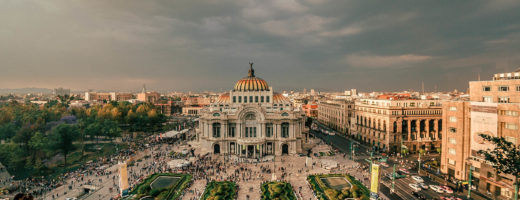
Zona Rosa is a business and entertainment district near the center of Mexico City. It is one of the city’s most touristy areas, filled with hotels, dance clubs, restaurants, bars and live bands. Demographically, it boasts a healthy gay population as well as a relatively high concentration of Korean immigrants. Mexico City’s financial heart is also here, with the Mexican Stock Exchange building and the recently built 35-story HSBC building next to the Angel de la Independencia, amongst other banks with offices in this area.   Alameda Park is a public park in downtown Mexico City. It is a green garden with paved paths and decorative fountains and statues, and is frequently the center of civic events. The area used to be an Aztec marketplace and after the Conquest, the Catholic Church used the area for the burning of heretics and witches. The park was created in 1592, when Viceroy

See the Full Version Here

Mexico – Patzcuaro and Rural Area (photos)

| January 1st, 2009 | Comments Off

Pátzcuaro is a charming colonial city high in the Sierra Madre mountains (altitude 7200 feet) about fifty miles west of Morelia. It’s filled with historical architecture and shops with local colorful handicrafts . Around the two town squares are classic arched facades. The Pátzcuaro area is well known for it’s rustic, carved wooden furniture and it’s colorful woven textiles, among many other crafts. On Day of the Dead, Nov.1 and 2, and All Saints’ Day during Easter Week, Pátzcuaro is host to particularly notable festivals involving colorful rituals and celebrations. Read the story about gay Mexico

See the Full Version Here

Gay El Salvador 2007

| January 1st, 2009 | Comments Off

A journalist for the London newspaper ‘The Independent’ describes the threatening oppression against LGBT rights activists in El Salvador. Against all odds the rights work goes on, now acknowledged by Elton John and the media. Also see: Gay El Salvador News & Reports 2005 to present By David Usborne 22 March 2007 http://news.independent.co.uk/world/americas/article2381063.ece Voice for homosexuals: A hero in the fight for gay rights Despite a number of death threats, the efforts of William Hernandez, praised by Sir Elton John for speaking up for gays and lesbians, are finally being recognised. When William Hernandez sees countries as varied as Britain, the United States and South Africa taking steps towards equal rights for homosexuals, he can be excused for feeling mixed emotions. Last week, the revolution came even to the neighbours of his own country, El Salvador, when Mexico City splashily boasted its first civil union between two men. Mr Hernandez

See the Full Version Here

Mexico – Mexico City Gay Marriage Rally (photos)

| January 1st, 2009 | Comments Off

On Valentines’ Day 2005 a public pro-gay marriage rally was held in central Mexico City at Alameda Park. Hundreds of LGBT couples showed up amid speeches, music and dancing to sign their names on a "Registro de Sociedades de Convivencia" form. The ‘officials’, dressed in academic caps and gowns were members of PFLAG (Parents and Friends of Lesbians and Gays). The energy was very much like a wedding, with tears, confetti, rice, hugging and passionate kissing.   Read the story about gay Mexico

See the Full Version Here
Page 3 of 3«123