Home / Contact / Stories,
News & Reports / Photos
Worldwide Gay Life,
Sites and Insights
Stories + Photographs + News + Reports + Links
Gay Afghanistan, After the Taliban.
Homosexuality
as Tradition
Intro:
With the fall of the Taliban government and its inhumane restrictions
on normal life (including homosexual favoritism), old sexual traditions
have re-surfaced as Afghanistan rebuilds
its
shattered culture. Two recent news reports form the main body of this
story, one from the 'Los Angeles Times' (April 2002) and the other
from
the 'Washington Blade' (December 2001). Two more similar stories
about the recurrence of Pashtun homosexuality, from the New York
Times
(February 2002) and Times of London (January 2002), can be found in
the Afghanistan
News & Reports 2002-04 .
Also
see:
Afghan
News and Reports 2001 to present
Afghanistan Photo Gallery
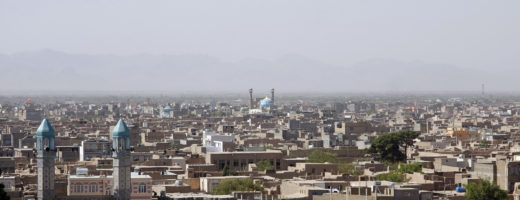
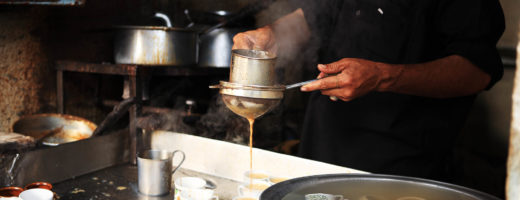
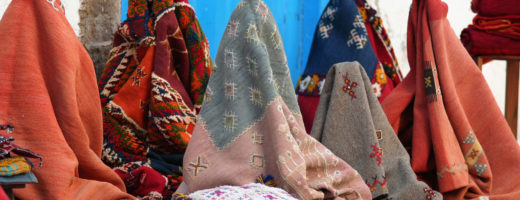
(The
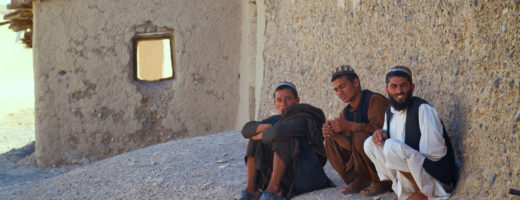
photos in this story are not part of the news reports from the 'L.A.Times'
or the 'Blade'. They were collected randomly from the Internet and no
attribution is made here about the sexual orientation of the people
in the photos.)
Also
see a more recent story (2004) on gay Afghanistan on
this site by
American writer Michael Luongo who traveled to Afghanistan: http://www.globalgayz.com/g-afghanistan2.html

By
Richard Ammon,
Maura
Reynolds
and Lou Chibbaro
February 2002
Updated April 2008
"Homosexuality
and Lesbianism have no place in Islam. This issue is clear from
the primary source of Islam, The Holy Quran. No Muslim scholar, Imam
or a leader of a Muslim community can alter this injunction. A person
committing such an act is in violation of God's Law and should seek
repentance before God gives up on him or her. It was the people of prophet
Lot (peace be on him) who started this evil act and were severely punished
by God."
So proclaims a vigorously religious imam from his Internet
pulpit, making clear the position of the vast majority of Muslims regarding
homosexuality. From the western shores of ancient Morocco across
thousands of sandy Islamic miles to the far eastern islands of Indonesia,
almost half the distance of our known world, homosexual behavior is
pronounced anathema to the faithful. The sweep of condemnation of same-gender love is about equal to the sweep of eastern and western
Christianity in the other half of the world. So the world, one would
think, should be shorn of such an abomination wherein a man layeth with
a man as a woman.
Sex
and Scripture
Except its not. And the simple reason is that both of these
imposed belief systems ignore and deny the natural varieties
of the human psyche. There has always been
heterosexual attraction and there has always been homosexual attraction.
To
elevate and validate one over the other is to praise the left eye over
the right eye. But simple and superstitious scribes of these faiths
have written reams of florid, passionate and volcanic verses that embrace an artificial dichotomy of homo-and-hetero sexual and emotional orientation. Had they consulted the sentient beings in their tribes instead of magical
and mystical oracles, burning bushes or delusional visionaries, the
scribes might well have written more humane and precise books. Homoerotic
affections, legends and myths run deep into the human heart and far
back into the haze of history.
Besides its natural occurrence in our genes and neurons, another reason
homosexual behavior and desire has not been stamped out by every conceivable
type of secular cure and sacred persecution is that homosexuality serves
both religion and culture well. It is perhaps one of the great anthropological
paradoxes (if not hypocrisies) that the history and behavior of homosexuality
has been carried down through fifteen centuries by gender-segregated
Muslim cultures and, as well, by male Christian monastic confederations. (Does anyone seriously believe that sexual favors between altar boys
and clerics began in the 20th century?) Men
serving men is as old as the species and is found in many sacred
and secular societies from the ancient Egyptians and Chinese to the
sportive and warrior ranks of Greeks and Romans.
A thoughtful reader who engages in cross-cultural studies
will not get far before they discover what many western lesbigay people
already know about the indigenous and hidden homosexual tradition practiced,
in local varieties, by countless unmarried and married men in Arab/Muslim
countries.
In these cultures, homosexual activity serves as a temporary (yet
valid and important) proxy stage of growth between puberty
and marriage. Since there is varying but distinct social separation
of the genders in these Muslim states, teen/young adult men develop
special friendships and informal partnerships with other males, some
older, some younger.
Within
these dyads most adolescents have their first sexual experiences
as they practice on each other. Usually the younger
partner takes the passive role and the older one the active role. Eventually,
in their twenties and early thirties, most go on to exclusive heterosexual
marriage. Others, to be sure, go on to marriage but maintain secret
sexual liaisons with other men. Often these are men (and women) who
are more truly attracted to their own gender but would not dare to reveal
it.
Social
Sexual Studies
In 1997, an important book was published on this matter. Islamic
Homosexualities: Culture, History, and Literature in which
Stephen O. Murray and Will Roscoe, along with eight other authors, analyze
the sexual shadows of Islam. One reviewer, Daniel Pipes of the Middle
East Forum in Philadelphia wrote the following appraisal of the book:
"As with so much else in the sexual realm, Islamic norms differ
profoundly from Western ones. The authors establish several points:
(1) Islam treats homosexuality far less harshly than does Judaism
or
Christianity. (2) Sex between men results in part from the segregation
of women and in part from the poetic and folk heritage holding
that the penetration of a pretty boy is the ultimate in sexual delight. (3) Sex between men is "frowned upon, but accepted" so long
as the participants also marry and have children; and also if they keep
quiet about this activity. (4) The key distinction is not
hetero vs. homosexual but active vs. passive; men are expected
to seek penetration (with wives, prostitutes, other males, animals);
the only real
shame is attached to serving in the female role. (5) Youths usually
serve in the female role and can leave behind this shame by graduating
to the male role. (6) The great Muslim emphasis on family life
renders homosexuality far less threatening to Muslim societies
than to Western
ones (Muslim men seeking formally to marry each other remains unimaginable)."
Dominant Sex with Boys
As if, coincidentally, to prove the validity of the Murray and Roscoe
book, three recent stories about sexual practices in Afghanistan--usually
a subject too sensitive for public discussion--came boldly from the
'Times of London', the 'New York Times' and the 'Los Angeles Times'.
Each report portrays a custom of social/sexual behavior that stretches
back into the thin pages of history.
As seen through todays more politically-correct-sexually-sensitive-Judeo-Christian-western
lens, the articles describe a
sexual practice that falls outside most standards of acceptable behavior. This
is, for some, an unsettling account describing the taking of
teen/young adult boys by strong-willed men--born into and hardened
by the harsh
conditions
of war, deprivation, bloodshed and death--for the purposes of
sexual pleasure and trophy gloating.
Nevertheless,
these
male-to-male conjunctions generally follow along old Arabic traditions.
In most modern Islamic
cultural (premarital) homosexual behavior there is a mute
understanding that sex is mutually consensual, temporary and that
its a form of companionship, if not affection, among peers.
But
an apparent distinction seems evident in this particular
Kandahar variation as reported
in the newspaper articles quoted below.
The dating and courtship appears more coercive, more
opportunistic and seems to take advantage of younger guys who almost have no
other choice than to accept the money or gifts from bigger
and
more powerful 'commanders' whose bit of authority is bestowed by
their gang-member status, their guns and the shattered legal/police
system.
The news reporters report did not (and could not) probe into the thoughts
of these youthful men as they submit to these older 'patrons'.
A
young
native of Kandahar now living in Kabul was recently asked about these
arangements. He replied that
the older guys throw lavish parties where they "marry" their
boytoys, showering them with gifts, especially weapons! Generally
one guy is 15-20 years older than the other. The relationships
can sometimes be very intense, and tend to last 5-6 years until
the boy grows up and marries a woman.
(To
be sure, there are many Kandaharis who oppose the practice. But poverty
and power have always played crucial roles
in shaping cultural behavior.)
Whether
the activity is mutual or forceful, there is an almost universal
attitude in these eastern cultures that such sexual indulgence
is not gay, that is, it's not sex or love between
two men who identify as homosexuals. (In Afghanistan
it's common for the older participants to be married
with kids.) Rather, in a collective mental shell game the meaning
of sex is re-framed: heterosexual men engage in homosexual
behavior in which the younger guy is not a fem but
obedient and passive and the older one is not a butch queer but
assertive and active.
What
eventually happens to these Kandahar relationships? Some fade
away,
some stop when one partner marries or moves away, and some continue
for years. In other other Muslim countries, the roles eventually
change.
As the
older ones marry, the younger ones mature and become the dominant
partner to a younger submissive friend. Or, as the reporter from
the Los angels Times wrote,
"sometimes when the halekon <young male lovers> grow up, the older men actually
try
to
keep
them in the family by marrying them off to their daughters."
(To
many western 'gay culture' observers, all this seems at first glance
to be denial and self-deception. It stirs up, again, intriguing issues
of homosexual identity vs homosexual behavior: does behavior define
identity or is identity separate from behavior--and how do behavior
and identity interface with sexual orientation...?)
Islamic
Human Rights
Framing all this role-playing and sexuality is another important facet
of the Islamic prism to keep in mind as the 'Times' story is read.
Despite
the man-in-the-street assertion that Islam preaches love and peace
among neighbors and strangers alike, Islamic governments over
the course of history have often proven to be harsh and authoritarian. Little value has been put upon the dignity and rights of the individual.
Expressions of protest, legal recourse and fairness, and gender equality
have been poorly served by many of the domineering male-ruled governments
under the flag of Islam. (Indeed, the Christian west is hardly
free of its share of oppressive rulers and statutes as well.)
In another one of many recent books about Islam, Ann Elizabeth Mayer
has written Islam and Human Rights: Tradition and Politics (1998), in which she compares Islamic law with international human rights
laws and concludes that these two are not compatible. This she attributes
to the belief that Islam is divinely commanded from God and
criticizing it is considered blasphemous.
The
author goes on to make an unsettling observation: "Islamic human
rights can offer no means for protecting the individual against
state-approved Islamic laws and policies that violate international
human rights laws." Thus, Muslim theocratic states exist by
asserting Islamic law over secular humanitarian law at the cost of freedoms
of their citizens, female and male. The result is that violations of
international human rights, especially for women and gays, are justified
by oppressive governments using the higher Koranic dictates.
With these referents in mind, about traditional Islamic sexuality
and human rights concepts, the Times story is reprinted
here with its observations and conversations heard on the
Taliban-free
streets of Kandahar. (This was once the capital of the extremist leader
Mullah Omar who rode around in expensive SUV's listening to CD's
while
dictating to the impoverished faithful that the playing of music was
sinful.)
(1)
Los
Angeles Times
April 3, 2002
Kandahar's Lightly Veiled
Homosexual Habits
Society: Restrictions on relations with women lead to greater prevalence
of liaisons between men, a professor says.
By MAURA REYNOLDS, KANDAHAR, Afghanistan
In his 29 years, Mohammed Daud has seen the faces of perhaps 200 women.
A few dozen were family members. The rest were glimpses stolen when
he should not have been looking and the women were caught without their
face-shrouding burkas.
"How can you fall in love with a girl if you can't see her face?"
he asks.
Daud is unmarried and has sex only with men and boys. But he does
not consider himself homosexual, at least not in the Western sense.
"I like boys, but I like girls better," he says. "It's
just that we can't see the women to see if they are beautiful. But we
can see the boys, and so we can tell which of them is beautiful."
Daud, a motorbike repairman who asked that only his two first names
and not his family name be used, has a youthful face, a jaunty black
mustache and a post-Taliban clean shaven chin. As he talks, his knee
bounces up and down, an involuntary sign of his embarrassment.
"These are hard questions you are asking," he says. "We
don't usually talk about such things."
Though rarely acknowledged, the prevalence of sex between Afghan
men is an open secret, one most observant visitors quickly surmise.
Ironically, it is especially true here in Kandahar, which was the heartland
of the puritanical Taliban movement.
It might seem odd to a Westerner that such a sexually repressive society
is marked by heightened homosexual activity. But Justin Richardson,
a professor of psychiatry at Columbia University, says such thinking
is backward--it is precisely the extreme restrictions on sexual relations
with women that lead to greater prevalence of the behavior.
"In some Muslim societies where the prohibition against premarital
heterosexual intercourse is extremely high--higher than that against
sex between men--you will find men having sex with other males not because
they find them most attractive of all but because they find them most
attractive of the limited options available to them," Richardson
says.
In other words, sex between men can be seen as the flip side of the
segregation of women. And perhaps because the ethnic Pushtuns who
dominate Kandahar are the most religiously conservative of Afghanistan's
major ethnic groups, they have, by most accounts, a higher incidence
of homosexual relations.
Visitors might think they see the signs. For one thing, Afghan men tend
to be more intimate with other men in public than is common in the West.
They will kiss, hold hands and drape their arms around each other while
drinking tea or talking.
Moreover, there is a strong streak of dandyism among Pashtuns
males. Many line their eyes with kohl, stain their fingernails with
henna or walk about town in clumsy, high-heeled sandals.
The
love by men for younger, beautiful males, who are called halekon, is
even enshrined in Pashtuns literature. A popular poem by Syed
Abdul Khaliq Agha, who died last year, notes Kandahar's special reputation.
"Kandahar has beautiful halekon," the poem goes. "They
have black eyes and white cheeks."
But a visitor who comments on such things is likely to be told they
are not signs of homosexuality. Hugging doesn't mean sex, locals insist.
Men who use kohl and henna are simply "uneducated." Regardless,
when asked directly, few deny that a significant percentage of men in
this region have sex with men and boys. Just ask Mullah Mohammed Ibrahim,
a local cleric.
"Ninety percent of men have the desire to commit this sin,"
the mullah says. "But most are right with God and exercise control.
Only 20 to 50% of those who want to do this actually do it." Following
the mullah's math, this suggests that between 18% and 45% of men
here engage in homosexual sex--significantly higher than the 3%
to 7% of American men who, according to studies, identify themselves
as homosexual.
That is a large number to defy the strict version of Islam practiced
in these parts, which denounces sex between men as taboo. Muslims seeking
council from religious elders on the topic will find them unsympathetic.
"Every person has a devil inside him," says Ibrahim. "If
a person commits this sin, it is the work of the devil." The Koran
mandates "hard punishment" for offenders, the mullah explains.
By tradition there are three penalties: being burned at the stake, pushed
over the edge of a cliff or crushed by a toppled wall.
During its reign in Kandahar, the Taliban implemented the latter. In
February 1998, it used a tank to push a brick wall on top of three men,
two accused of sodomy and the third of homosexual rape. The first two
died; the third spent a week in the hospital and, under the assumption
that God had spared him, was sent to prison. He served six months and
fled to Pakistan.
Apparently to discourage post-Taliban visitors, the owners of a nearby
house have begun rebuilding on the site. "A lot of foreigners came
and started interviewing people," says Abdul Baser, a 24-year-old
neighbor, who points out the trench where the men were crushed. "Since
then they have rebuilt the wall."
But many accuse the Taliban of hypocrisy on the issue of homosexuality.
"The Taliban had halekon <young male lovers>, but they kept it
secret," says
one anti-Taliban commander, who is rumored to keep two halekon. "They
hid their halekon in their madrasas," or religious schools.
It's not only religious authorities who describe homosexual sex as
common among the Pashtuns.Dr. Mohammed Nasem Zafar, a professor at Kandahar
Medical College, estimates that about 50% of the city's male residents
have sex with men or boys at some point in their lives. He says
the prime age at which boys are attractive to men is from 12 to 16--before
their beards grow in. The adolescents sometimes develop medical problems,
which he sees in his practice, such as sexually transmitted diseases
and sphincter incontinence. So far, the doctor said, AIDS does not seem
to be a problem in Afghanistan, probably because the country is so isolated.
"Sometimes when the halekon grow up, the older men actually try
to keep them in the family by marrying them off to their daughters,"
the doctor says. Zafar cites a local mullah whom he caught once using
the examination table in the doctor's one-room clinic for sex with a
younger man. "If this is our mullah, what can you say for the rest?"
Zafar asks.
Richardson, the psychiatry professor, says it would be wrong to call
Afghan men homosexual, since their decision to have sex with men is
not a reflection of what Westerners call gender identity. Instead,
he compares them to prison inmates: They have sex with men primarily
because they find themselves in a situation where men are more available
as sex partners than are women. "It is something they do,"
he notes, "not something they are."
Daud, the motorbike repairman, would concur that the segregation of
women lies at the heart of the matter. He says his first sexual experience
with a man occurred when he was 20, about the time he realized that
he would have difficulty marrying. In Pashtuns culture, the man has
to pay for his wedding and for gifts and clothes for the bride and her
family. For many men, the bill tops $5,000--such an exorbitant sum
in this impoverished country that some men, including Daud, are dissuaded
from even trying.
"I would like to get married, but the economic situation in our
country makes it hard," Daud says. Daud talked about his sex life
only in private and after being assured that no photos would be taken.
"I have relations with different boys--some for six months, some
for one month. Some are with me for six years," he says. "The
problem is also money. If you want to have a relationship with a
boy, you have to buy things for him. That's why it's not bad for the
boy. Some relationships need a lot of money, some not so much. Sometimes
I fix a motorbike and give it to him as a present."
It is not easy to conduct homosexual affairs, he admits. Home is out
of the question. "If my father were to find me, he'd kick me out
of the house," Daud says. "If you want to have sex, you
have to find a secret place. Some go to the mountains or the desert."
Opinions
differ as to whether homosexual practices in Kandahar are becoming more
open or more closed since the Taliban was defeated. For instance,
after anti-Taliban forces arrived in the city in early December, some
Westerners reported seeing commanders going about town openly with their
halekon. But that has changed in recent weeks since Kandahar's new governor,
Gul Agha Shirzai, issued an order banning boys under 18 from living
with troops. Officially, the ban is aimed at ending the practice of
using children as soldiers.
"It is not that way," says one of the governor's top aides,
Engineer Yusuf Pashtun, objecting to the insinuation that the boys may
have been used for sex. The governor's order said only that "no
boys should be recruited in the army before the age of 18," he
adds.
Still, the anti-Taliban commander, who is close to Shirzai, acknowledged
that one goal of the order was to keep halekon out of the barracks. The move simply drove the practice underground, he says.
Zafar, the doctor, says that in the community at large the Taliban frightened
many men into abstinence. "Under the Taliban, no more than 10%
practiced homosexual sex," he says. "But now the government
isn't paying attention, so it may go back up to 50%."
But Daud thinks the opposite may happen. If coeducation returns and
the dress code for women eases, men will have fewer reasons to seek
solace in the beds--or fields or storage rooms--of other men.
"As for me, if I find someone and see she is beautiful, I will
send my mother over to her" to ask for her hand in marriage, Daud
says. "I'm just waiting to see her."
(End
the 'Times' story)
Secrets
and Traditions
Despite the apparent homosexual behavior of the men in the story, same-sex
attraction is, paradoxically, scorned in the Afghan culture.
Truly 'gay'
men and women deeply hide their secrets and seek no attention. Homosexuality
is not understood as anything natural or acceptable and the idea
of mutual same-sex pleasure or romance is alien to the vast
majority who have never encountered such ideas.
It's
impossible to accurately analyze the motives of the Pashstuns
who favor
young men. Most of these 'daddies' are essentially
straight but, lacking status in their meager lives, feel a
certain 'swagger' of social enhancement for having
a trophy
boy.
As
for sexual pleasure it's hard to say if it's
anything other than pleasurable anal penetration for the
the dominant partner, his role being the same as with a woman;
his masculinity remains
unquestioned. It's improbable he would reciprocate the pleasure for the submissive
younger partner since it would mean being passive and therefore
unacceptable to his manly self-image.
For
some of these married-with-kids men, it's also possible that
some of them are really gay and this traditional conquest of younger
guys
serves their secret very well. It'easy to understand that
such a partner would desire to go further than his straight peers in
returning
the pleasure--and possible romantic affection--to his companion. It
would seem an ideal arrangement for a closeted person.
But
even here the gay man runs a risk since the younger man is probably
heterosexual and knows (after comparing notes with his own peers) the
roles and limits expected of both of them. If the young one suspects
the older one enjoys the intimacy too much too often or if he goes
too far (perhaps switching psoitions) suspicions and rumors might
arise.
And there could hardly be a greater fear than being exposed as a
homosexual and humiliated in front of one's family, friends or
community. For the authentic gay man, sexual desire can put him in
harm's way whether
he lies about his truth or is truthful about his lie.
(2)
Washington Blade
December 21, 2001
New
Afghan Rulers Better for Gays?
By Lou Chibbaro Jr.
<In this story, there is no reference to specific sexual behavior.
Rather its a larger overview of the new governments hoped-for
attitude toward legislating human rights to a long oppressed populace--including
gay and lesbian citizens.>
WASHINGTON,
D.C.: The interim government scheduled to take office in Afghanistan
on Dec. 22 will discontinue executions of people charged with sodomy and will likely adopt a more tolerant policy on human rights for gays,
according to a spokesperson for the Northern Alliance, the Afghan military
faction that fought against the Taliban.
Haron
Amin, who appears frequently on U.S. television news programs on behalf
of the Northern Alliance, said Dec. 18 that leaders of Afghanistan's
newly installed interim government are outraged over human rights
abuses by the Taliban regime and will embrace the principles of human
rights. "This issue [of anti-gay persecution] would have to
be brought up in a court," he said. "The Taliban killed people
for all kinds of reasons, not just sexual orientation."
The international human rights group Amnesty International has documented
cases where Taliban authorities executed men charged with sodomy
by using military tanks to topple cement walls on top of them, crushing
them to death.
Amin said he could not predict how the new interim government would
address specific human rights issues, such as anti-gay persecution,
but said he was certain the government-sponsored abuses of women
and minorities under the Taliban government would be discontinued. "The new administration will be much more tolerant," he said.
Amin's comments came as the Northern Alliance--in coordination with
the U.S. bombing campaign--ousted the Taliban from power. The bombing
was part of the U.S.-led war against terrorism that began after the
Sept. 11 attacks on the World Trade Center and the Pentagon.
Several leading Afghan political factions, including Northern Alliance
members, reached an agreement to form a post-Taliban, interim government
following a series of meetings last month in Bonn, Germany. The factions
selected Hamid Karzai, an ethnic Pashtun tribal leader with strong
ties to the West, as the interim government's prime minister. Karzai
is scheduled to take office Saturday, Dec. 22.New leader more moderate?
Daniel Brumberg, a professor of government at Georgetown University's
school of international relations, said Karzai is known as a moderate
who holds "secularist" views on the subject of religion and
government. Brumberg said that while Afghanistan's conservative,
Islamic traditions would make it unlikely that Karzai would openly
embrace gay rights, he said the changing conditions brought about
by the ouster of the Taliban will enable Karzai to at least put an end
to draconian practice such as summary executions of gays. "This
will be a power-sharing government, so there may be a lessening of Islamic
fundamentalism," Brumberg said. "But it won't be a secularist
state any time soon."
Since
the United States began its war against terrorism in late September,
gay rights advocates have expressed concern that many of the Arab
and Islamic countries that signed on as coalition partners in the war
routinely treat gays as criminals.
For example, some coalition partners, including Saudi Arabia, Yemen
and the United Arab Emirates, have laws that call for the death penalty
for sodomy, similar to the laws adopted by the Taliban regime in Afghanistan.
Gay rights organizations, including the International Lesbian &
Gay Human Rights Commission, said they recognize the need for the
United States to align itself with Islamic and Arab nations in the war
against terrorism. But they said the United States and other Western
allies should use their relationship with Arab and Islamic countries
to persuade those governments to improve conditions for gays. The
Bonn accord will help Human rights groups such as Amnesty International
note that the so-called Bonn agreement, which established the framework
for the interim government in Afghanistan, includes language calling
for the establishment of an independent commission to monitor human
rights and to investigate human rights violations.
The agreement calls for the United Nations to assist the commission. "Amnesty International believes there is some good human rights
language in the Bonn text that can be built upon in the future,"
said Alistair Hodgett, the group's spokesperson. "References to
human rights, social justice, international law, and the rule of law
are particularly welcome."
Hodgett said that while the Bonn agreement is silent on the question
of anti-gay persecution, he is hopeful that the agreement's call for
the establishment of an independent judiciary and the creation of a
pluralistic democracy would lay the groundwork for curtailing persecution
of minorities, including gays.
The
U.S. government also plans to cite the Bonn agreement
as a means of encouraging the new Afghan government to respect the human
rights of all groups, said Richard Boucher, a spokesperson for the State
Department.
In a press briefing on Dec. 14, Boucher said human rights "has
been very much a part" of the U.S. effort to bring about change
in Afghanistan. "After the horrible excesses of the Taliban
and some of the others who have been in Afghanistan, I think Afghans
themselves understand this to be a critical issue," Boucher said.
The human rights commission established under the Bonn agreement, Boucher
said, calls on the new government to develop institutions to protect
human rights. "And this remains an important goal of the United
States," he said.
Gay Muslims hopeful Faisal Alam, founder of the gay Islamic group
Al Fatiha (http://www.al-fatih.net), said his group is monitoring
the latest developments in Afghanistan and is cautiously optimistic
that the climate for gays there will improve, at least somewhat.
"We
know the new government is likely to continue Islamic traditions,"
Alam said. "My feeling and my hope is the new government won't
kill gay people. But we are not likely to see gays supported."
Alam said that while groups have formed over the years representing
gays in a number of Islamic countries, he is unaware of the existence
of any gay Afghan group.
The lack of such an organization, and the lack of any visible presence
of a gay community in Afghanistan, means that those who favor improvements
in the treatment of gays in Afghanistan must direct their attention
"to our own governments," Alam said. "We should put pressure
on the United States to take a stand on human rights for lesbians and
gays in all countries, including Afghanistan," he said.
The Revolutionary Association of the Women of Afghanistan, which
formed in the 1970s in opposition to the Soviet Union's occupation of
Afghanistan, has called for a secularist government with a complete
separation of church and state.
Alam and Michael Heflin, director of Out Front, an Amnesty International
project that monitors anti-gay persecution, said RAWA's strong human
rights positions and its outspoken efforts to end discrimination
against women in Afghanistan make the group a potential ally for
Afghan gays.
The group's extensive writings on the Internet make no direct mention
of gay rights. The group did not respond to an e-mail message seeking
comment on gay issues. A Baltimore-based representative of RAWA, who
is affiliated with the University of Maryland, did not return a call
by press time.
Mixed
record for Alliance
On its Web site (http://www.rawa.false.net/index.html), RAWA warns that
the Northern Alliance and other Afghan military and political factions that have fought against the Taliban have themselves engaged in human
rights violations against women and other minorities. "All
of them have a [rifle] in one hand and the [Koran] in the other to kill,
intimidate, detain and mutilate our people arbitrarily," an essay
on the RAWA Web site says.
The essay was especially critical of the Northern Alliance, saying its
leadership was responsible, in part, for repressive policies against
women prior to the Taliban takeover. Amin, the Northern Alliance spokesperson,
said one or two of the seven factions that made up the Northern
Alliance in the early 1990s engaged in human rights violations. He said
the other factions condemned these abuses.
"Our policy has been to condemn, not condone, human rights violations,"
Amin said. "We support bringing to justice those who perpetrated
human rights violations." Brumberg, the Georgetown University professor,
said one of the Northern Alliance's leaders, Burhanuddin Rabbani,
who was the recognized leader of Afghanistan before the Taliban takeover
in 1997, is an Islamic fundamentalist who is believed to be responsible
for some human rights abuses.
Brumberg
noted that, with Rabbani's allies playing a significant role in the
new interim government, the issue of whether anti-gay persecution will
end remains in question. "Most of the players come from factions
and groups that don't have a good record on human rights," Brumberg
said. "So the best you can expect is that the new players will
just ignore gay issues and will not continue with the excesses of the
Taliban."
With Rabbani passed over for the post of prime minister in favor of
Karzai, Brumberg said reports have surfaced that the interim government
is considering appointing Rabbani as the head of a newly created Afghan
Supreme Court. Such a court would be responsible, among other things,
for hearing cases involving human rights abuses. To call for trials
or investigations of past human rights violations, including the persecution
of gays, "will open a can of worms for these new people coming
to power," Brumberg said, because many of them have been involved
in such violations.
"I can't imagine in all of this there will be too much emphasis
on gay rights," he said. "I can't imagine there will be
any emphasis on gay rights. But it's possible that the new regime would
at least curtail some of the abuses of gays and women that occurred
in the past. That may be about all you could expect." (End
of Blade report)
Two
more similar stories about the recurrence of Pashtun homosexuality,
from the New York Times (February 2002) and Times of London (January
2002), can be found in the Afghanistan
News & Reports 2002-04 .on
this site.
|