Home / Contact / Stories,
News & Reports / Photos
Worldwide Gay Life,
Sites and Insights
Stories + Photographs + News + Reports + Links
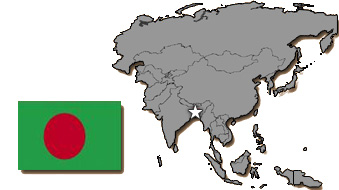
Gay Bangladesh
Arriving in Dhaka,
the capitol of Bangladesh, is instant immersion into the dense
capitalistic present attached to equally intense traditions
of family and Islam. Anywhere a visitor looks there are hoards of
people-- dark faces, beautiful and weathered, young and old. But
nowhere will one see anything that resembles a gay community. Homosexual
life is a stealth subculture that thrives in secrecy yet enjoys the
benefits of permissive friendship intimacy.
Also see:
Gay Bangladesh
News & Reports
Gay
Islam Reports 1998-2002
Gay
Islam Reports 2003-05
Gay Islam
Reports 2006
Bangladesh
Photo Galleries
By Richard
Ammon
GlobalGayz.com
Updated
August 2008
A story
about gay Bangladesh does not begin with gay and lesbian relationships;
doesn’t
begin with focused community action; and does not describe LGBT venues,
social clubs or bars or discos. The reason is simple: there
is virtually no publicly identifiable Bangladesh gay community.
The Bigger Picture
More significantly, such a report is subsumed by the density
of life in this overflowing country: vast entrenched poverty along
with intense
overpopulation (140 million people in an area the size of New York
state or England and Wales without Scotland), widespread under-education,
bamboo-hut slums, chaotic traffic in the streets, high levels of
malnutrition (nearly 30%), tangled corruption in the halls of government,
frequent
electrical failures and subsequent water shortages, and a powerful
web of family traditions that allow no place for or knowledge of
something so unusual as same-sex romance.
Homosexuality as a viable social issue in 21st century
Bangladesh is faceless and invisible with no constituent voice
from any leader,
activist
or politician. It is a much hidden, invisible transparent way of
life that is shaped and colored by an intense palette of Islam, low-wage
manual labor, unbreakable family knots, ox-plowed rice paddies, extensive
fish farms and sclerotic roads packed with honking traffic.
A short walk
around a few blocks in the capitol of Dhaka or other major cities
such as Khulna or Chittagong provides harrowing evidence
of
the daunting life most people endure daily with little variation.
Barefoot beggars aged 10 to 80 tug with skinny little fingers at
the sleeves
of a tourist. Construction laborers dismantle a building manually
with hand-held sledge hammers and chisels wearing no hard hats, boots
or
masks while others on the site squat on their haunches pounding bricks
into small pieces because the country lacks gravel quarries for making
roads or cement.
Countless bicycle rickshaw drivers dressed in worn longis (a skirt-length
wrap pulled tightly around the waist) and rubber sandals look with
pleading eyes at a visitor hoping for business. A mile long ride
through polluted trash-strewn streets that risks being crushed
between a swerving
battered bus and an equally swerving overloaded truck will reward
them with less than 50 cents. Traffic lights mean nothing—red, yellow
and green are mere suggestions as countless vehicles crush forward
into intersections with predictable tangled results. Road lines are
ignored as five or six rows of traffic crowd along three-lane streets,
every vehicle honking at the other as if they can get out of the way.
The rickshaws’ only defenses in such a mob are quick wits,
fast turns and the tinkling of their bicycle bells.
Bangladesh
is also countless dark faces, young and beautiful, old and weathered,
most with no future except today’s meager earnings
that average $1 a day, a communal home with dirt or cement floors,
a rough-hewn bed (shared with one or more others), perhaps running
water or a local hand pump, a collective squat toilet.
In rural villages traffic is relieved but there is often no electricity
or running water in the rattan and thatch-roofed huts. Rice fields
are commonly plowed with water buffalo. Crops are taken
to local markets on bicycle carts loaded high with hay, sugar cane,
burlap
bags of rice,
green vegetables, melons or kindling wood. Fishermen ply the countless
rivers, waterways and coastlines of Bangladesh from dawn to dusk
netting fish and shrimp and, sadly, an occasional river dolphin.
The southern
half of the country is a vast alluvial delta for the rivers that
flow out of India and Burma to empty their polluted waters into
the Bay
of Bengal. The images are intensely colorful, crowded, noisy, energetic
and grim—except for the very few wealthy ones who drive through
the city in chauffeured air-conditioned Mitsubishi SUV's on their
way to make deals in the free-enterprise chaos of the city.
Finding Gay Life
Where in this harried congested maze of excess millions does one
find something as strange as ‘gay Bangladesh’?
Of course, same-sex attraction happens anywhere and everywhere
so my search for a gay community led me to Dhaka, the capitol of
14
million
where, like the rest of the society, gays are separated into classes
based on birth and money.
It
is virtually impossible for an outside casual gay visitor to access
poorer class gays, unless by accident or an offer of money,
both
of which are very unlikely since homosexuality as a mutually
intentional sex act is indiscernible among the semi or uneducated
underclass
in
Bangladesh. This doesn’t mean all pre-marital guys have no sexual
experience; furtive erotic moments happen especially since same-gender
friends hold hands and sometimes share the same bed, but in the morning
there is nothing said and ‘romance’ build around such
tentative moments is imaginary.
Nevertheless, in huge metropolitan centers every kind of night-life
proliferates. Sex can be found for sale but it’s mostly of
the hetero variety. There are particular areas--in large and small
towns--where
ladies are available (often with the knowledge of their husbands:
this is a very poor country) but certainly no other woman would dare
go
to such places looking for lesbian contact. Indeed, lesbian contact
in Bangladesh is as invisible as the evening star at dawn.
Male prostitution is unusual but not unheard of in the shadow life
of Dhaka. Poverty forces unwelcome choices on vulnerable young
people looking for a way out of a rural life or in desperate need
to help
their families or as a gay person in need of escape from a suffocating
straight life. A clandestine male brothel called ‘Sibling’ is
alleged to operate somewhere in the bowels of Dhaka where men--mostly
likely closeted gay or bisexual husbands--feel urged to go for moments
of pleasure, risky as it may be either from disease or blackmail since
it’s believed the place is owned by a mafia-like underground
gang.
It
is easier, indeed necessary, to access middle and upper class Bangla
gays especially via Internet groups such as BoysOnlyBangladesh (described
below). This particular Yahoo group, started three years ago is
a treasure for anyone looking for friendship or a pickup. I posted
a notice on
the site (by joining the group) requesting help and information
about
gay Bangladesh and received a dozen replies within a few days.
The following interviews were conducted with people who offered
their
own personal stories and insights about being gay in their country.
Martin
and Shateel
I arrived by way of Tokyo, Singapore and Kuala Lumpur (Northwest
and Malaysian Airlines) into Dhaka and booked into the comfortable
3-star
Golden Deer Hotel ($40 single including breakfast) in the leafy
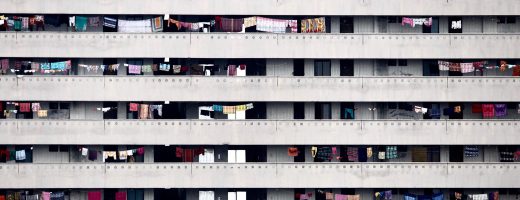
Gulshan area. From my balcony I had a 180 panoramic view of Dhaka
and Gulshan
Lake (first photo, above).
A few phone calls (everyone seems to have a mobile phone) and
my arrangement were made to meet with my new friends.
My first evening I was seated at the mid-scale Nirfa’s Asian restaurant
overlooking Gulshan Circle with Martin and Shateel. They have been attached to
one another for over a year in an easy bond that’s often sexual yet equally
mindful. Despite the swirl of busy-ness in their lives they have become a compass
point for each other that includes frequent mobile-phone chats, check-ins and
sleep-overs.
In
class-divided Bangladesh these two men have luckily found enough overlap between
their slightly different ranks to form a close bond. Martin, 39, an architect,
comes from a
well-to-do banking family, was educated abroad, and travels to Rome or
Sydney when he has time away from his own construction and design company.
(Photo left shows the interior of Martin's house.)
Shateel,
24, is studying for his MBA at the ‘best’ University of Dhaka following
an undergraduate degree in civil engineering. He is the son of a well-educated
financial consultant father and mother who live in Abu Dhabi for most of the
year because of work. Martin and Shateel met through a network of mutual friends
when they were both invited to the same (discreet) party.
“
Martin drives his own car and I take the bus.” Said Shateel when asked
how their situations differ. Shateel’s considers his family to be upper
middle class and Martin’s to be upper upper. Shateel is headed for likely
prosperity in the merchant-management profession for which India and Bangladesh
are famous--keen of mind, efficient, well-educated, reliable and articulate
in English as well as the native Bangla languages, both Shateel and Martin
have
much in common intellectually and socially.
The unfortunate twist in this union is their lack of choice about living
together as partners—at least for now--and setting up a home where they can have
full privacy or host friends for dinner.
Their
relationship swims in a sea of social complexity that leaves no
one in Bangladesh untouched, foremost of which is the primacy of family
ties
and duties.
Despite his financial resources, which could allow him full autonomy,
Martin dutifully—and willingly--lives with his 80-ish mother in a
new four-story house he designed and built overlooking a lake in the
upscale neighborhood of
Banani, another leafy neighborhood adjacent to Gulshan in northern Dhaka. Shateel,
despite his expat parents in far-off Abu Dhabi, is obliged to live with his uncle
and sister in a middle class area a short drive away from Martin’s place.
The usual sequence for Bangladeshi sons of all classes is to live with
one’s
family, get married, bring a wife to live with his parents, (a daughter leaves
to live with her in-laws) and start another generation. “The most important
connection we have here in this country is with our family. Those ties can never
be broken and we take care of each other, like a tribe. They come first,” said
Martin as we stood on the roof garden of his new house overlooking the tightly
packed houses and lime green lake below.
Within this primacy of family units, there is no place for a
gay relationship in the Bangladesh culture. It does not fit into any family arrangement.
Gay lovers are left to manipulate their love around obligations, duties
and roles
imposed
from birth from generations beyond. When I asked Shateel how their relationship
can work within these limitations, a mask of uncertainty seemed to wash
over him as he hesitated to answer: “We will have to take the future one step
at a time.”
Martin’s mother has come to understand her son is different and does not
want a wife; he did marry once to please her and his late father but it ended
badly. She no longer presses him on that matter and indeed is affectionate toward
Shateel and enjoys his overnight presence a couple of times a week, “although
she does make references to a wife sometimes when I am there,” said Shateel, “perhaps
as a last bit of her lingering denial.”
“
I think she knows…mothers know these things even if they don’t’ want
to,” added Martin. Shateel thinks his sister is also aware since he spends
some nights away but he is not close to revealing his secret to her.
A slight but significant conveniences for these men--that straight
unmarried couples don’t have—is that they can sleep in the same room and
in the same bed, as best friends, without raising suspicion since it is a common
custom shared by nearly all Bangladesh families.
Ronald and
Sagor and BOB
As in many other sexually repressive cultures that criminalize
or condemn same-sex desire, the Internet has become
a lifeline for otherwise isolated
LGBT individuals.
From Bali to Buenos Aires to Budapest queer folks are finding hot dates,
sincere friends and organizing on the Net. Bangladesh is no exception.
Several bright
men seized the opportunity in 2003 to help start the now popular BoysOnlyBangladesh
Yahoo group (http://groups.yahoo.com/group/BoysOnlyBangladesh/) to address
the vacuum in the gay community in Dhaka.
It’s mission is “to bring Bangladeshi gays under one roof and provide
a safe place for a better united life. It aims to strengthen the bond of gay
brotherhood and friendship through entertainment and at the same time raise awareness
about safe sex…”
Ronald joined BOB in 2005 and is now a co-moderator. He
is an executive with an international corporation. At 37 he is handsome,
soft-spoken
and
has been in a primary relationship with Sagor, equally good-looking,
for more that five years.
As usual,
they do not live together even though Ronald is in the unusual position
of having his own apartment since his parents live in the northern
part of the
country,
and he can afford it.
Sagor has a master's degree and has worked in merchandising and currently
works for a communication service. His family is friendly
with Ron and appreciate Ron’s
friendship with Sagor and encourage him to often
stay with
Ron. Of
course, Sagor’s family do not have a clue
that he and Ronald are romantically involved but a few of Ron’s
family members know about the relationship and are supportive.
Because of his position Ronald's company provides him with a car and
driver. He often travels to other parts of Asia as well as
Europe
and America
on business
while
Sagor
remains
at home with
no opportunity for such international trips. But he does not express
discontent (Ronald's trips are short) and is obviously happy to have
Ronald in his life, saying, "in Bangladesh it is not easy to continue
a relationship for five years. We are sacrificing lots for each other
and our better understanding. Because of our
culture and social pressure there is often the possibility to break
up, but
we have struggled
to keep this relation and he does care lots about me. Whatever outside
people say
or think we know that we love each other. "
In 2003 the gay ‘community’ was only a loose network of
isolated individuals who kept in contact by mobile phone or met strangers
in cruisey
Ramna Park. BoysOnlyBangladesh was started with the intention
of creating a focused
friendship network that offered more than a secret nightlife of at-risk
behavior. With over seven hundred current members today
BOB friendship circles have widened
and resulted in numerous couples as well as some organized social
activities. The essence of BOB is the messaging that
happens nearly every day
as friends and
new acquaintances
make contact, arrange dinners or hookups.
Over
dinner at Spaghetti Jazz, a lively restaurant in Gulshan, Ronald,
Porosh and Prince (the other two co-moderators of BOB) and Tanveer, a
good-looking quick-witted Economics sophomore
student from BRAC University, described how
BoysOnlyBangladesh was seen as a springboard for building a community.
They decided to create weekly social gatherings called
HOP—hang out place. From tentative early steps when they feared
posting the location on the Internet until a couple of hours before
the meeting to today’s
more bold posting days in advance, the meetings are now more
relaxed and bubbly and have their silly moments. During
my HOP visit postcards secreted in from
Bangkok with erotic male images were passed eliciting mixed expressions
of embarrassment and delight.
Unfortunately there are no women who have been bold enough to join
in a HOP but for now the men seem satisfied in having a
daylight open air
place
to
share gossip,
arrange films shows, coffee klatches (‘Coffee with BOB’)
and announce parties (some hosted by Ronald or Martin at their residences
and BOB gatherings held at Fu Wang Bowling
Club). This is not to suggest that cruising in Ramna Park is finished.
There will always be fearful closeted men who dare only make such
hidden exchanges
as they hide their feelings from family and spouses.
Lesbians
and Marriage
Not surprising, there have been few if any BOB postings by lesbians. I asked three different gay men where the lesbians are
and all three responded
with
blank looks. Their guesses had to do with the
usual Muslim restrictions placed on women.
The fate of virtually all Islamic women here is marriage and motherhood. Anyone stepping outside that frame by expressing independence or,
far worse, as a
lesbian, renders herself un-marriageable and sets her on a likely
course of rejection
and social derision. The exception of course is money; a woman
of high means could insulate herself with sufficient material and
social protections.
She
night travel abroad for advanced study and purchase a second residence
there or in
a distant area of Bangladesh where she can find privacy. But such
a woman is extremely rare and courageous.
As in most Islamic countries the vast majority of gay men and
lesbian women bite the bullet and marry (presumably straight) women, make
children and
play the
roles demanded by family and society. Martin was far from alone
in following this tradition as a gay man and far from alone in
the anguish
and pain
it causes both families.
Hasib
Old Dhaka is a vast jumble of narrow streets jammed with countless
tiny shops selling everything from aluminum pots to unrefrigerated
shanks
of beef to
forged iron gates or huge burlap sacks of rice. Chicken meat
is kept fresh by keeping
the birds alive until the moment of sale, then off with their
heads and plucked on site. Squeezing tightly past each other
are thousands
of colorful
rickshaws
with bells tinkling; crowds of pedestrians weave and turn as
they slowly edge along from shop, mosque, or cafe to home.
In
the center of the old town is a wide grassy expanse enclosed
within the high brick walls of the 17c Lalbagh Fort (photo left).
It’s
a former royal residence that includes a hammam (bath house),
a princess's’s mausoleum and an
antique mosque.
I was escorted around the old walls by Hasib and Adnan, two natives
of Dhaka. Hasib is a university graduate in philosophy. As we
strolled the
large grassy
expanse inside the fort I asked Hasib about his connection with
other gays in Dhaka.
Hasib is a mild-mannered man of 29 who told me he is bisexual.
He and his boyfriend, Rumel, have been an invisible couple for
five years. He thought the majority of Dhaka’s gay and
bisexual men do not belong to BOB or go to a HOP. Rather they
usually have a primary friend or two (sexual
or not) whom they see frequently and who may regularly sleep
overnight in their family’s home. Bisexual men do not usually
congregate with gay folks since they prefer not to be perceived
as
one of them.
Both Hasib and Rumel live with their own families and both expect
to marry women sometime in the next few years--and they do not
intend
to give each
other up.
They will carry on as they have since they became lovers.
As we walked around the fort, populated with strolling heterosexual
couples, he seemed unconcerned about taking a wife and
keeping his lover: “it’s
accepted here to stay with a friend and no one gives it a thought. They have
no idea about homosexuality so they don’t’ even think about it. You
can see how this ‘denial’ works to our benefit. They would never
accept our relationship but we are best friends—everyone has that, so we
can continue and they don’t see it. It’s quite convenient, don’t
you think?”
As Martin and Shateel revealed the day before, such ignorance
and indifference allows countless gay and lesbian couples to ‘flourish’ inside
the homes of their parents and siblings without suspicion or scrutiny.
After Hasib
marries his wife will come to live with him in the same house as his
two brothers (and their eventual wives) and his parents. He fully expects
to live with them
for the rest of their lives.
Ironically, Hasib’s girlfriend, with whom he also secretly sexual and expects
to marry, cannot currently stay overnight in the same room with Hasib although
young men and women are free to interact freely during the day. Couples can be
seen in parks and public places in Dhaka sitting close and whispering sweet nothings. Bangladesh is a Muslim country but it is not an Islamist
one so people don’t
live under the gender-separate strictures seen in other more fundamentalist
countries as Saudi Arabia or Pakistan.
Hasib and Rumel have little awareness of gay life outside Bangladesh
or Dhaka. They don’t much see farther than their own families or careers since there
is no ‘place’ from which to look. Like most most LGB people Hasib and Rumel are content to live in sexual isolation that does not
feel oppressive
in their daily lives. Secrets are their pleasure and their protection.
Like most middle class men they have computers at home and can access
the wider
LGBT world
community but they have little interest. Hasib, for example, was not
aware of the Gay Games or the OutGames of 2006; he had other things
to do.
Hasib and Rumel are far from alone in their household romance.
There is a similar truth about the other couples I met during
my visit. Prince
and
his
boyfriend
Aminul of two years study the same subject—English literature—at
Daffodil University in Dhaka (there are hundreds of schools of higher learning
there). Because Prince lives in a dormitory Aminul’s mother wants
Prince to stay with her family to be sure he gets proper food and rest.
Needless to
say this gives the young (22 and 24) couple plenty of opportunity to
study each other as well.
(Another truth is the role of the firstborn son in the family
structure who is looked to for grandchildren and eventual support
of the
parents, which
puts further
pressure on gay men if they are the eldest. As one man observed,
it’s
easier on gay sons if they have one or more hetero brothers who please
the parents with
grandchildren.)
Adnan
and his Transsexual Friends
My other companion at Lalbagh Fort was Adnan Hossain, a college
lecturer in Development Studies at British-American University,
a small new
college, one
of many in Dhaka.
(The desire for higher education in Dhaka is ‘ferocious’.
Photo below: Dhaka University.) Adnan is probably the
most knowledgeable person in Bangladesh about the ‘outcast’ hijra
transsexual ‘females’ of the Bangla culture. His
interest in human sexuality extends across a broad social spectrum
from queer
studies to transgender
identity. He has extensively researched and written about the
underserved and scorned world of male-to-female trans persons
who inhabit the nether-land
of
cross-gender life.
During
a visit to his university office, Adnan insisted the word ‘hijra’ is
difficult to translate into English because it is a summary
word that encapsulates a variety of ‘other-sex’ people. “Hijras
are a mosaic of ‘polymorphous’ gendered
females who live on the impoverished fringe of society. Nearly
all of these women are male-to-female. Many have had sex change
surgery yet many have not. The latter
are not simply transvestites because these ‘men’ identify
as women and feel that is their true gender ID. Keeping their
cocks acts like a mask
that protects them from being identified as a hijra in the
areas where they live with
their straight families.”
Adnan claims hijras are seen by straight society as sexually
impotent, but closer analysis reveals them as authentically
sexually desirous
beings who
gain gratification
as passive partners of males and being in that role allows
them to feel vicariously female.
Adnan says he is not “a gay”; he is married and his wife recently
they gave birth to a daughter. Prior to his marriage Adnan disclosed to his fiancé that
he had previously taken a hijra as a ‘wife’ as
part of his research. Although it was not a legally registered
ceremony there
was a hijra ritual
conducted by that community. Adnan said his legal wife accepted
this arrangement since
she was quite liberal of mind.
“The hijra subculture is a very closed subculture. They are ridiculed
and scorned by the larger society so they are naturally protective
of their bodies and community. I could never get inside their minds, their community, their
mythology, their secrets as an outsider, so I agreed to marry one in order to
become more
familiar
and friendly with them. I wanted to take the step into their
world.”
Seemingly a cold motive for taking a hijra ‘wife’, Adnan is nevertheless
passionate about his desire to talk and act on behalf
of the hijra community, which numbers in the thousands in Bangladesh, to improve their dim destiny. “Some
of them are so uneducated they cannot even write their name…I
would like to start a school for them and help them to find work other
than begging and
prostitution.”
Yet despite their questionable status hijras are occasionally
called to ‘bless’ childbirths
or entertain at weddings (where more than one seduction has occurred) stemming
from old cultural myths that ‘inter-sex’ people had spiritual
powers of wisdom and healing. Indeed, across southeast Asia similar
folklore regarding
enhanced spiritual authority of polysexual people are woven into ancient
legends and mythologies.
But not uncommonly, even in western ‘advanced gay societies’,
transsexuals and transvestites are often the orphans of gay lib and
gay rights movements.
Bangladesh is no exception, Adnan explained. “There
is no outreach to the hijra community from the gays here—assuming
they could find each other. Even if there were a gay community
here, they would have nothing to do with hijras,” Adnan
declared. “It’s another example of what I call ’horizontal
hostility’ –discrimination against one’s
own type or rank.”
However, Adnan does recognize that it’s more than just a sexuality issue. “We
are a very class-separated society. You don’t find the
classes mixing very much. Hijras are very poor and without
education. The middle and upper classes
don’t deal with such people except as laborers. It would be virtually impossible
for these two extreme opposites to meet as equals. There are many well-to-do
gays who drive around in their family’s car and go to universities abroad.
This is unthinkable for the vast majority here, including the hijras. So I’m
not foolishly idealistic but I think hijras do deserve
a small chance at a better life.”
The negative view of hijras was further confirmed
over dinner one evening at Spaghetti Jazz restaurant. (An electricity
outage
cut
the air conditioning
while we ate but we continued our ‘heated’ discussions.)
When I asked Tanveer why
gays don’t connect with hijras. He said, “because
of their weird behavior. They harass people. They don’t
just beg. If someone refuses to give them baksheesh (money)
they will start
yelling at the
person or they
may
expose themselves and act crazy. Who wants to be around that!
I think that they are caught in a vicious cycle of cultural
norm--a transgendered person can't find any normal job anywhere.
So, the
only thing they can do is go and live with people of their
kind and extort money from others or work as sex-workers."
However, even though he keeps a distance from hijras, he does
not feel they should be treated so badly by society. Tanveer
told about
a debate
with his
father when
the latter expressed his disapproval of transvestites one evening
at dinner. This was just after his parents had sympathetically
viewed
an Indian TV
program on HIV, which included reference to same-sex relationships.
(Parental reactions
to sexual matters can vary greatly: when he revealed his sexual
orientation to his masters-degreed mother she immediately broke
into distracted
prayer. And
his brother does not understand it at all.)
Adnan’s Family
Adnan is also a good example of what communal extended-family
living is like, as children grow up among parents,
siblings, aunts, uncles
and cousins
and
even second cousins. This was the way the Hossain family lived
when I visited one
evening. In the course of a two-hour dinner (eaten with fingers)
I met eight different relatives of Adnan’s including
an expat aunt visiting from London where she is a citizen.
(She was, to my delight, actively interested in my views
of the ‘gay world’ beyond Bangladesh.)
In addition to his family, there were four servants (who averaged
US$15-18 a month salary plus housing and food) who helped in
the household and
who also lived in the large five-story apartment block that
housed this populous
family.
(The family owns the apartment block as well as other real
estate.)
In previous generations large families were considered a happy
abundance. Indeed, Adnan’s mother has four sisters and one brother. His father has thirteen
siblings; his grandfather had ten siblings. It’s no wonder Bangladesh
is the most densely populated country in the world. To counter such
proliferation the government has been promoting a widespread
education program encouraging
smaller families of two or three children, which seems to be happening.
Rezwan
When we met, Rezwan had recently returned to Dhaka from Boston,
Massachusetts (USA) by way of Florida and Houston where he
has relatives. (Like other
SE Asian countries Bangladesh has a huge expat population
many of whom help
support their
immediate and extended families back home.)
He is one of many fortunate upscale Bangla students who go
abroad for university studies. Dublin, London and the USA
are popular
destinations
because of
the English language base as well as high quality coursework.
In Bangladesh, English is the
language of university education and private schools as well
as international business.
(One
afternoon I happened by a practice cricket match at the Chittagong
Grammar School (K-12) in Chittagong. (Photo left) As soon
as
they saw my camera
they crowded forward
pushing and squealing to be in my photo. Aged about 11 or
12 they spoke fluent English. “Yes, our school is based
on the Cambridge model,” they
proudly offered--along with an unfathomable explanation of
how to play cricket).
Rezwan graduated from Boston University with a degree in
environmental studies. His ‘gay story’ has an upbeat flavor in that he is out to almost
everyone in his family. He has told them, as well as his straight friends, of
his feelings for other men, and insisted he not be pressured into a sham marriage. He feels relieved having no secrets or pretending
to be something he is not. He is too advanced in his own truth to hide or lie to them. Yet, honest as he
has been, it’s unlikely his parents really understand his gay
orientation even though they have let up on their expectations for
him.
Nothing has changed as a result of his coming out. He lives
closely with his family and travels, hangs out or goes shopping
with gay and straight
friends. After
his return
from America his immediate efforts were aimed at securing
a satisfying job, which he found with a large NGO called
BRAC
that works to
educate rural villages
and
alleviate poverty—no small task in this country. (See
their web site: http://www.brac.net/index2.htm)
Typical for a member of a better class family he picked me
up in his family car with their driver at the wheel. As with
Adnan’s family, it’s common
to have several domestic staff (who are glad to have the job). When I suggested
a ‘nice’ restaurant Rezwan knew immediately where to go—Sajaa “an
exclusive restaurant” as stated on the door. Indeed, the tables were set
with linen, goblets, flowers, a formal menu and the waiters wore white jackets.
Despite Bangladesh’s spoiled reputation as an impoverished country
the large population of 140 million includes many
reasonably prosperous business
class people who ride around in chauffeured air-conditioned
SUV's or luxury Toyotas and dine at finer restaurants.
Rezwan’s gentle masculinity and easy manner (despite being an
unusual six feet tall with a sturdy build) made it easy to approach
him with questions
about
his gayness and how he segues that into his life back in Dhaka. With
long jet-black sweeping hair and a ready smile he expressed a calm
self assuredness that probably
came, in part, from his American college years, which included marching
in a couple of Boston Gay Pride parades. I suggested he could be the
only gay
man
in Dhaka who has marched in such a parade!
During his time at Boston University the Massachusetts supreme
court validated gay marriage, becoming the only US state
to take that monumental
step.
Rezwan could not help being impressed by this great stride—especially
since it was in stark contrast to his home country where such coupling
is unheard
of.
Was it hard for him to put all those out experiences back
into a closet? “Not
really. Since I came back my time has been taken up with finding a job and going
for interviews. That is my priority so I can begin my career. Besides, I know
the gay situation here. I don’t cruise public places but I have gay friends.
I don’t expect much romance. I have my family and they are very
important to me and now I have this exciting new job.”
In
the long run, however, Rezwan
feels Bangladesh does not have what he wants as a gay person
or as a businessman.
He is
pleased with
his new
job because
it will allow him to become acquainted with international
clientele and gain some advantage as he eventually seeks
out a future
position, perhaps
like
Ronald, with a multinational company. Since
most foreign companies in Bangladesh are based in the Americas
or Europe he also
hopes to fulfill his
personal dream of a long-term relationship with a partner
from a more tolerant, gay-visible
land.
A Gay
Community?
The evening I went to the HOP with Ronald, Rezwan, Prince
and Porosh, I observed about twenty guys gathered
by a small lake
to meet new
people, hug old friends,
cruise a bit and plan for other events such as a film screening
or a party.(Next photo)
Prince told me BOB also quietly works to promote homosexuality
as a positive truth in Bangladesh. It has worked
with health organizations such as
Ayeen O Salish Kendro, ICDDR-B UNICEF and Bandhu in awareness-raising
programs
concerning HIV/AIDS and safe sex. BOB has sent the highest
number of
gays for HIV/AIDS
testing
to Jagori--a sister concern of ICCDR-B working on voluntary
HIV/AIDS testing. Further, BOB has written gay-affirming
letters to the
media and some of
them have been published in the local newspapers.
Despite
its noble mission and its quiet educational efforts, what
was not discussed at the HOP that day, or later, was
organizing into a
visible political organization
for the purposes of promoting homosexuality as a valid
lifestyle with rights and recognition or actively lobbying
the government to change anti-gay laws.
But he momentum seems to be building to such a readiness. The ‘shadow’ BOB
is a courageous start; from a handful of Internet
savvy guys who created the Yahoo group—a silent,
secretive act—to their current once-weekly
public gatherings at the pond and HIV advocacy represents
significant progress in this city of 14 million—with
perhaps half a million LGBT folks.
Still, there is a huge discrepancy between such a number and
the reality in the streets; between the upscale
educated middle/upper
class
BOB members with computers
and western-gay-identified understanding of their feelings
and the squalid dwellings of barely literate men who have
sex with
men (MSMs)
with no
concept
of ‘gay’ identity—nearly
all of whom are married with kids. (Needless to say, many
upper and middle class gays are equally incognizant of
their orientation and
for whom marriage
and parenthood
are powerful masks.)
Given the lack of any overt alternative community
there is, nevertheless, one organization that works
in the ‘trenches’ of
furtive lower-class MSMs in the dense heart of Dhaka called
Bandu. Although far from calling itself
a gay organization this group--a health and education NGO
(non-governmental organization)--offers assistance, advice
and information to men who
feel a strange draw to the pleasures
of other men. Indeed, Bandu leaders decline to
identify their clientele as gay, which displeases
some BOB members who accuse Bandu of denial and homophobia.
But Bandu’s reluctance to accept the gay moniker is understandable
given the current state of the gay life in Bangladesh. Homosexuality
is technically a crime, an anachronism left over
from the British Raj empire days when ‘unnatural’ acts
were forbidden by law--a statute that has not been challenged
or changed since the late 1800’s. Identifying
Bandu’s clients as ‘gay’ risks
both social and legal estrangement that could well reduce
their acceptance and effectiveness in a community where they are
most needed.
And needed they are. One extended visit to this politically
underserved country, where cronyism and corruption
and chaos overtly and
covertly effect the lives
of its citizens, thus keeping millions in poverty or
driven to crime, is readily sufficient to see how vast
the problems
are
regarding health
and
survival.
Street
demonstrations against electricity blackouts and water
shortages (photo left) occurred nearly every
day while I was there. Unemployment
reaches
over 30%; solutions
for pollution of the rivers and air seem unapproachable;
transportation infrastructure suffers from poor road
conditions and crowding,
cumbersome bureaucracies,
minimal railroad services, inconsistent tourist services,
and wild bus, truck and taxi
drivers who offer no courtesy to pedestrians as they
speed and swerve through villages expecting children
and old
folks to jump
out of the
way when they
hear the blast of a horn. (They do.)
Who has time for something as odd as homosexual rights—or
even women’s
rights? Odd indeed, for homosexuality is a
mystery to most people here. One might as well advocate
for the rights of Abyssinian cats, which don’t’ exist
in Bangladesh.
Homosexuality is not shunned because of its criminal
tag; it simply does not exist in the common mind as
a variant
of human
behavior. This is
a highly social
culture with large and extended families, friends coming
and going, eating and sleeping together at different
times—all encased in
strong social traditions. So what is this strange thing
called gay love? Few have an answer.
Finally
So the gay scene in Bangladesh is ‘not’, and will not be in the near
future. When a country operates at the level
of survival there is little place for luxuries such
as gender studies or homosexual rights or gay organizations. For now only a lucky few who have been given the gifts of an education, access
to a computer, self-awareness about sexual orientation and perhaps a romantic
connection have found their way to other gays with awareness and identity. 
How
soon these fortunate few will coalesce into a public
forum is an easy guess—not
soon. And there is also the question if such a forum is welcome or
needed since traditional social invisibility serves well to protect
the privacy and pleasure
of gay and lesbian citizens.


For
more images see the Photo
Galleries on this site.

|