
Namibia, Africa


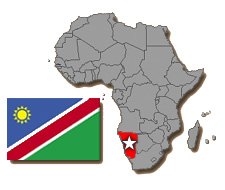
Namibia is a country in southern Africa on the Atlantic coast. Once a colony of Germany and later occupied by South Africa's apartheid government, Namibia gained full independence in 1990. Namibia is the least densely populated country in the world (2.5 inhabitants per square kilometre (6.5 /sq mi). Namibia’s economy consists primarily of mining and manufacturing. It's the fourth largest exporter of non-fuel minerals (lead, zinc, tin, silver, and tungsten) in Africa and a major producer of uranium. Sodomy is illegal in Namibia, and is punishable with prison time but homosexuality is not illegal. Treatment of gays ranges from social ostracism to (rare) physical attacks. In rural Namibia about 80 percent of (closeted) gay men and lesbians were forced by tradition to marry and have children. However, pro-gay rights groups, such as Sister Namibia, Out-Right Namibia and LGBT Network Namibia operate freely in Namibia's major cities.  Generally the climate for gays has improved since a new president, Hifikepunye Pohamba, was elected in 2004 and again in 2009.
 

Related GlobalGayz Articles & Photos:

Namibia – Random Rural Scenes (photos)

| April 2nd, 2011 | Comments Off

                               Namibia Random Rural Scenes Namibia is a huge country almost the size of Western Europe. With over 824.000 square kilometers and a small population of just over two million it is one of the least populated countries in the world. It’s human density is a mere 2.5 people per square kilometer. (Contrast that with Hong Kong’s density of over 16,000 per sq km.)   Posted Aliso Viejo, California, United States.

See the Full Version Here

Namibian Capital of Windhoek (photos)

| April 2nd, 2011 | Comments Off

                                                Namibian Capital of Windhoek Windhoek is the capital and largest city of the Republic of Namibia. It population is about 250,529. A population influx from all over Namibia has caused researchers to estimate the figure to be well over 300,000. It is a clean, modern, internet-connected bustling center with a range of architecture from Colonial German to art nouveau to mod chic. Due to its relative size Windhoek, in Namibia, the city is also the social, economic, and cultural centre of the country. Virtually every national enterprise has its headquarters here. The University of Namibia is here, as is the country’s only theatre, all ministry head offices, and all major media and finance bodies. The city of Windhoek’s budget nearly equals that of all other Namibian local authorities combined.   Posted Aliso Viejo, California, United States.

See the Full Version Here

Luderitz City on the Atlantic Coast (photos)

| April 1st, 2011 | Comments Off

Luderitz City on the Atlantic Coast Namibia is one of the largest countries in Africa, about the size of Western Europe. It gained independence from South Africa on 21 March 1990, following the Namibian War of Independence. Its capital and largest city is Windhoek. It has a population of 2.1 million people and a stable multi-party parliamentary democracy. Agriculture, herding, tourism and the mining industry – including mining for gem diamonds, uranium, gold, silver, and base metals form the backbone of Namibia’s economy. It is the second least densely populated country in the world, after Mongolia. Approximately half the population live below the international poverty line, and the nation has suffered heavily from the effects of HIV/AIDS, with 15% of the adult population infected with HIV in 2007.   Posted Aliso Viejo, California, United States.

See the Full Version Here

Etosha National Game Park (photos)

| March 31st, 2011 | Comments Off

Etosha National Game Park Etosha National Park is one of Southern Africa’s and most important Game Reserves. Etosha Game park was declared a National Park in 1907 and covering an area of 22 270 square km, it is home to 114 mammal species, 340 bird species, 110 reptile species, 16 amphibian species and, surprisingly, one species of fish. Etosha, meaning "Great White Place", is dominated by a massive white mineral pan. The pan is part of the Kalahari Basin, the floor of which was formed around 1000 million years ago. The Etosha Pan covers around 25% of the National Park.   Posted Aliso Viejo, California, United States.

See the Full Version Here

Gay Namibia Re-awakens From a Failed Past

| March 31st, 2011 | Comments Off

Intro: a long drive around this seemingly endless and empty country reveals much natural beauty and on closer inspection a modest LGBT population struggling to re-invent itself and advocate for recognition and rights. They are spirited, courageous and determined to bring justice for LGBT citizens and education for the whole country.By Richard AmmonGlobalGayz.comMarch 2011 For most travelers the country of Namibia in southern Africa seems inaccessible and remote, hardly worth the effort to go that far, and for gay and lesbian (LGBT) travelers the place might seem to be a cipher, a vacuum. But don’t be fooled. In this huge country, the size of western Europe, the landscapes are stunning, the cities modern and clean, the main roads well paved and along the way an entertaining mix of wild animals: untamed horses, ostriches, gemsbok, springbok, zebras, lots of very dumb donkeys, exotic birds, flamingos… (see Namibia Tourism website) One might

See the Full Version Here

Gay Life in Namibia 2011

| March 24th, 2011 | Comments Off

Intro: a long drive around this seemingly endless and empty country reveals much natural beauty and on closer inspection a modest LGBT population struggling to re-invent itself and advocate for recogniton and rights. They are spirited, courageous and determined to bring justice and education for LGBT citizens.   By Richard Ammon GlobalGayz.com March 2011 Also see Gay Namibia News & Reports Namibia is an enormous country, just shy of the size of Western Europe, that has stabilized itself from its history of violence under German then South Africa occupation in the last hundred years. It is Africa’s newest country, with independence achieved from South Africa on March 21, 1990 following passive and aggressive wars from 1966-88 collectively called the Namibian War of Independence. Namibia today has a population of 2.1 million people (that’s 6 people per square mile!) and a multi-party parliamentary democracy that has helped the country to become

See the Full Version Here