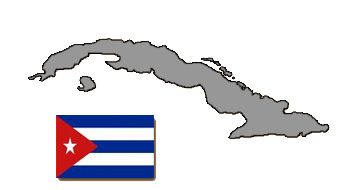

Cuba, Caribbean


Sexual relations between same-sex consenting adults 16 and over have been legal in Cuba since 1979, although same-sex relationships are not presently recognized by the state. In Cuba, people's organizations and public assembly must be state-approved, and LGBT associations and events were previously not permitted, however, Havana now has a lively and vibrant gay scene. Public antipathy towards LGBT people is high, reflecting regional norms. This has eased somewhat since the 1990s. Educational campaigns on LGBT issues are currently implemented by the National Center for Sex Education, headed by Mariela Castro. Read More


Related GlobalGayz Articles & Photos:

Gay Cuba 1997-2002

| January 1st, 2009 | Comments Off

Intro: This story is part one of a pair of stories about gay Cuba on this web site. This first one is a compilation of reports, stories and news that I stitched together from numerous sources before I visited Cuba. I suggest you peruse this before reading part two; it will give you a good idea about how controversial the homosexual issue is in Cuba under socialism. The second story, Gay Cuba 2003, is the result of my visit in February of this year. Getting a ‘take’ on gay Cuba today is like the old adage of four blindfolded observers trying to define an elephant while each is holding a different part of the animal. A unified consensus is very difficult when seen from the separate pieces. While each aspect is valid, any single view is not sufficient to define the beast. Such is gay Cuba today–a fractured, passionate, fearful,

See the Full Version Here

Gay Cuba – Changing

| January 1st, 2009 | Comments Off

Intro: This story is part two of a pair of stories about gay Cuba on this web site. The first, Gay Cuba 1997-02 (on a separate page) is a compilation of reports, stories and news that I stitched together from numerous sources before I visited Cuba. I suggest you peruse that story before reading part two, It will give you a broad idea about how controversial homosexuality is in Cuba under socialism. The second story, on this page, Gay Cuba 2003, is the result of my visit to that once-paradise island where gay life is still alive and humming although repressed. Not surprisingly, lesbigay folks dance a careful line between relative freedom and relative risk. Also see: Gay Cuba Stories Gay Cuba News & Reports 1997 to present Gay Cuba Photo Galleries Richard Ammon Updated July 2008 A brief reading about life in Havana reveals four common themes: (1) watching

See the Full Version Here

Cuba – Havana: City (1) (photos)

| January 1st, 2009 | Comments Off

Cuba was in Spanish possession for almost 400 years (circa 1511-1898). Its economy was based on plantation agriculture, mining and the export of sugar, coffee and tobacco to Europe and later to North America. The political and military history of Cuba in the 19th and 20th centuries has been tumultuous. On December 2, 1956 a party of 82 revolutionaries, led by Fidel Castro, landed in a yacht named Granma with the intention of establishing an armed resistance movement in the Sierra Maestra. The yacht had come from Mexico, where Castro had been exiled and where his army was strengthened with the help of Ernesto Che Guevara, who became one of the most important people in the Cuban revolution and one of Castro’s closest allies. Cuban dictator Fulgencio Batista launched a campaign of repression against the opposition, which only served to increase support for the insurgency and the army lacked the

See the Full Version Here

Cuba – Havana: City (2) (photos)

| January 1st, 2009 | Comments Off

Cuba was in Spanish possession for almost 400 years (circa 1511-1898). Its economy was based on plantation agriculture, mining and the export of sugar, coffee and tobacco to Europe and later to North America. The political and military history of Cuba in the 19th and 20th centuries has been tumultuous. On December 2, 1956 a party of 82 revolutionaries, led by Fidel Castro, landed in a yacht named Granma with the intention of establishing an armed resistance movement in the Sierra Maestra. The yacht had come from Mexico, where Castro had been exiled and where his army was strengthened with the help of Ernesto Che Guevara, who became one of the most important people in the Cuban revolution and one of Castro’s closest allies. Cuban dictator Fulgencio Batista launched a campaign of repression against the opposition, which only served to increase support for the insurgency and the army lacked the

See the Full Version Here