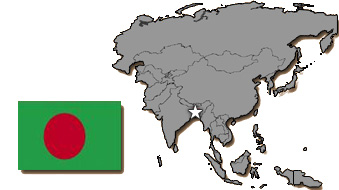
Bangladesh, Asia


Bangladesh is among the most densely populated countries in the world and has a high poverty rate. However, per-capita (inflation-adjusted) GDP has more than doubled since 1975, and the poverty rate has fallen by 20% since the early 1990s. Dhaka and other urban centers have been the driving force behind this growth. The country has made significant progress in human development in the areas of literacy, gender parity in schooling and reduction of population growth. However, Bangladesh continues to face a number of major challenges, including widespread political and bureaucratic corruption, and discrimination against women and religious and ethnic minorities. LGBT human rights are not respected in Bangladesh, and there appears to be no organized movement to advance such human rights. And such acts of homosexuality will lead to imprisonment up to at least 10 years or even face the death penalty. Also see: Islam and Homosexuality
 

Related GlobalGayz Articles & Photos:

Gay Bangladesh Life–an Invisible Minority

| February 1st, 2012 | Comments Off

by Rainer Ebert 30 January 2012 Babu and Arif have been friends from childhood. They went to school together, played on the same cricket team and had no secrets – except one, but only until recently. While they were out having phuchkas at a street stand somewhere in Dhaka, Arif suddenly slipped into an awkward silence for a couple of seconds. “Babu, shon, toke amar kichu bolar ache… Listen, I want to tell you something…” “What is it, dosto?” “I haven’t been fully honest with you… Remember when I told you that I really like that girl? That wasn’t quite true. It’s actually her brother I like. I am gay.” Babu, shocked at the unexpected confession and not quite sure how to respond, got up and walked away. No matter how often Arif tried to call Babu in the following days, there was no response. Six months went by until

See the Full Version Here

Gay Life in Bangladesh

| January 1st, 2009 | Comments Off

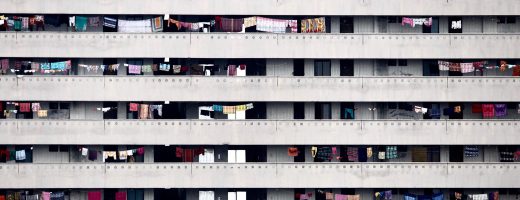
 Arriving in Dhaka, the capitol of Bangladesh, is an instant immersion into a dense capitalistic present time that’s linked to an equally intense tradition of family and Islam. Anywhere a visitor looks there are hoards of people–dark faces, beautiful and weathered, young and old. But nowhere will one easily see anything that resembles a gay community.   Homosexual life is a stealth subculture that thrives in secrecy yet enjoys the benefits of permissive friendship intimacy. However, for a first time gay visitor finding “Gay Life in Bangladesh” among the millions in Dhaka is not difficult thanks to the internet and extensive friendship networks. The Bigger Picture A story about gay Bangladesh does not begin with focused community action and does not describe LGBT venues, social clubs or bars or discos. The reason is simple: there is virtually no publicly identifiable Bangladesh gay community. More significantly, such a report is subsumed
See the Full Version Here

Gay Bangladesh by Martin Foreman

| January 1st, 2009 | Comments Off

Guest writer Martin Forman opens a small window onto the sly, furtive and suspicious gay ‘scene’ in the city of Sylhet, Bangladesh. This is followed by a level-headed essay by Afsan Chowdury, a native author, who writes: "there are gays in our Bengali society, and there is no sense in suppressing and stifling it." Also see: Islam and Homosexuality Gay Bangladesh Stories Gay Bangladesh News & Reports 1998 to present Gay Bangladesh Photo Galleries Gay Islam Reports Gay Bangladesh-Part 1: A Market and a Mosque By Martin Foreman Martin’s Web Site: http://www.martinforeman.com/ (Martin Foreman is a Bangkok-based writer of fact, fiction and opinion. He tries "not to get the three confused.") Updated March 2008 (Note: all images have been randomly selected from the Internet and make no presumption about sexual orientation.) Sylhet, Bangladesh: It’s eight o’clock in the evening and Tarique and Paritosh are taking me out to look at

See the Full Version Here

Bangladesh – Chittagong Ship Breaking Yard (photos)

| January 1st, 2009 | Comments Off

Along the southeast coast of Bangladesh is the Mohsin ship breaking yard where immense ocean freighters and tankers are torn apart by hundreds of gritty, lean, strong, bronze-skinned, men–by manual labor. Using blow torches, sledgehammers and wedges they carve the mammouth steel whales into chunks just off shore. After the huge pieces crash into the water like glaciers calving, they are winched onto shore where they are cut up into bite-size pieces weighing hundreds of pounds then lifted and hand-loaded by teams of guys who sing in rhythm as they walk lock-step carrying the very heavy inch-thick steel plates onto trucks to be sold (very profitably by the owners who live in huge mansions in town) as scrap metal across the country and Asia (with some reworked locally into ‘new’ ships). Also pictured here is the breaking up a 7′ long 10″ thick bronze propeller blade (entire 3-blade propeller is

See the Full Version Here

Bangladesh – Chittagong City (photos)

| January 1st, 2009 | Comments Off

Chittigong city is Bangladesh’s second largest metropolis with about four million people. For tourists there are only a few sights such as the War Cemetery, the Zia Museum, Shahi Jama-e mosque and a market. Not mentioned in guidebooks is the huge and haunting ship-breaking yard just north of the city. Photos 2-5 below reveal a harsh realm of labor and danger as giant ships are torn apart piece by piece. For more photos of this daunting place see the photo gallery titled Bangladesh: Chittigong Yard on this site. (Ship Breaking Yard) Photos 31-33 are of the Zia Mansion and Museum where the ‘founder’ of Bangladesh, President/General Zia Rahman was assassinated in 1981 (he took office in 1971). No photos are allowed inside so there is no picture here of the grim display that still contains the bloodied carpet where the President fell, although the bulllet holes are still visible in

See the Full Version Here

Bangladesh – Dhaka City (1) (photos)

| January 1st, 2009 | Comments Off

Dhaka is the capitol of Bangladesh with about 11 million people. Every form and level of life is here, from upscale mansions and privileged kids playing cricket to impoverished manual workers tearing down buildings with sledge hammers as well as women picking through garbage. Traffic is intense and dense; bicycle rickshaws by the thousands clog the streets making for slow cross-town travel by car or bus. But such inconveniences are balanced by the spontaneous friendliness and curiosity of nearly everyone toward foreign visitors.

See the Full Version Here

Bangladesh – Dhaka City (2) (photos)

| January 1st, 2009 | Comments Off

Dhaka is the capitol of Bangladesh with about 14 million people. Every form and level of life is here. Dhaka University is the Cambridge of Bangladesh where only the best students gain entry (photos 10-16). The huge but polluted Buriganga River (photos 21-28) slices through the city making it a port for cargo and passengers–and a swimmg hole for kids. Hindu temples and Muslim mosques co-exist peacefully (photos 32-38). In the center of town is the mausoleum of Zia Rahman, the assassinated President (photos 48-51) as well as the futuristic national parliament building (photos 52-55).

See the Full Version Here

Bangladesh – Jessore to Khulna (photos)

| January 1st, 2009 | Comments Off

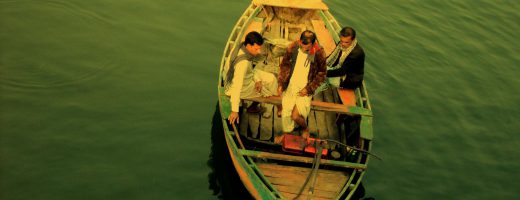
The drive from Jessore airport to Khulna city (on the way to Mongla and the Sundarbans National Park) takes about an hour and offers a ride via the village of Bagerhat where many mosques were built in the 15th century. Along the way are countless waterways where small cargo boats transport goods from one village to another.

See the Full Version Here

Bangladesh – Mongla to Khulna (photos)

| January 1st, 2009 | Comments Off

Traveling by car from Mongla to Khulna reveals a kaleidoscope of variety–from bicycle carts loaded with huge cargos to animal crossings to overloaded buses to busy ferry landings (in Kulna, photos 25-37). In Khulna city is the Khulna Shipyard Ltd (repairing yard) where workers including women chip paint from old hulls with hand-held chisels (photos 42-52).

See the Full Version Here

Bangladesh – Sundarbans Park & Mongla Town (photos)

| January 1st, 2009 | Comments Off

On the south coast of Bangladesh the Sundarbans (and Sundarbans National Park) contain the largest mangrove forests in the world. An easy boat ride from the town of Mongla (photos 51-64) leads into the forest via small rivers and rivulets. The park lies in the enormous delta at the mouth of the Ganges River and is spread across areas of Bangladesh and West Bengal, India, forming the seaward fringe of the delta. Along the way can be seen local folks trawling by hand for shrimp and fish. In local villages in the park a visitor is greeted with a warm welcome, food and curious conversation. Also see the New Yorker magazine story about Sundarban’s tigers.

See the Full Version Here

Bangladesh – Cox’s Bazar (photos)

| January 1st, 2009 | Comments Off

Cox’s Bazar is Bangladesh’s beach resort town on the southeast coast near Burma. Getting there by bus from Chittagong is another colorful adventure of street life and risky vehicle drivers. Photos 1-23 reveal the vibrant social and commercial life along the main highway, including military practice maneuvers with soldiers sporting live-ammunition machine guns (photo 9). Cox’s Bazar town is not picturesque but the hundred-mile long white sandy beach makes up for that. New glass and marble hotels are rising adjacent to poor tin houses where locals bathe at a communal water handpump (photos 30-36). South of town are numerous shrimp farms raising valuable seafood.

See the Full Version Here

Bangladesh – Faces (1) (photos)

| January 1st, 2009 | Comments Off

The face of Bangladesh is a great portrait of human beauty, of hardship, youth and aging, restraint and color, urban and rural, manual labor and spontaneous friendliness and curiosity. Most of these images are taken from other Bangladesh photo galleries. Posted .

See the Full Version Here

Bangladesh – Faces (2) (photos)

| January 1st, 2009 | Comments Off

The face of Bangladesh is a great portrait of human beauty, of hardship, youth and aging, restraint and color, urban and rural, manual labor and spontaneous friendliness and curiosity. Most of these images are taken from other Bangladesh photo galleries. Posted .

See the Full Version Here